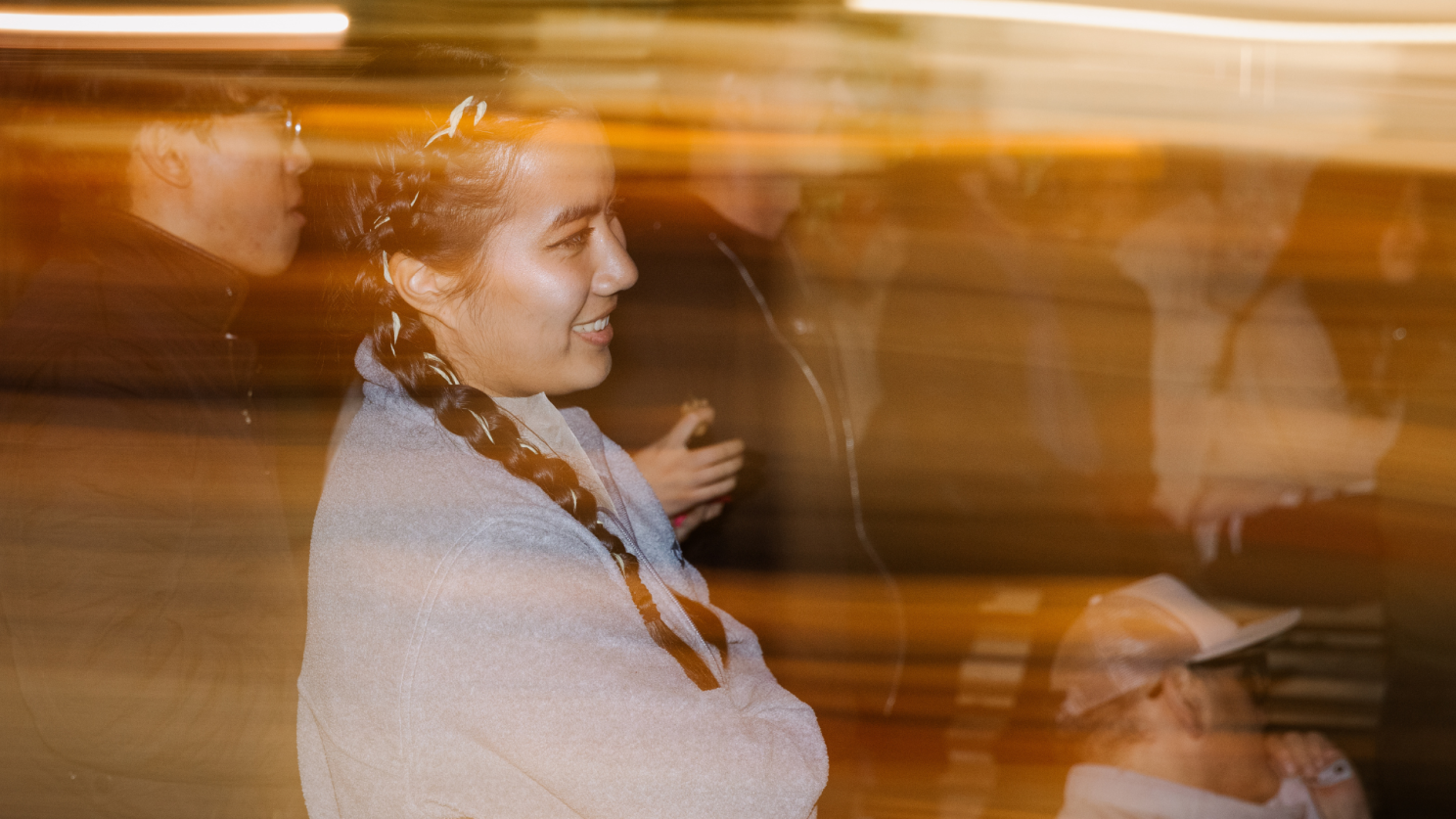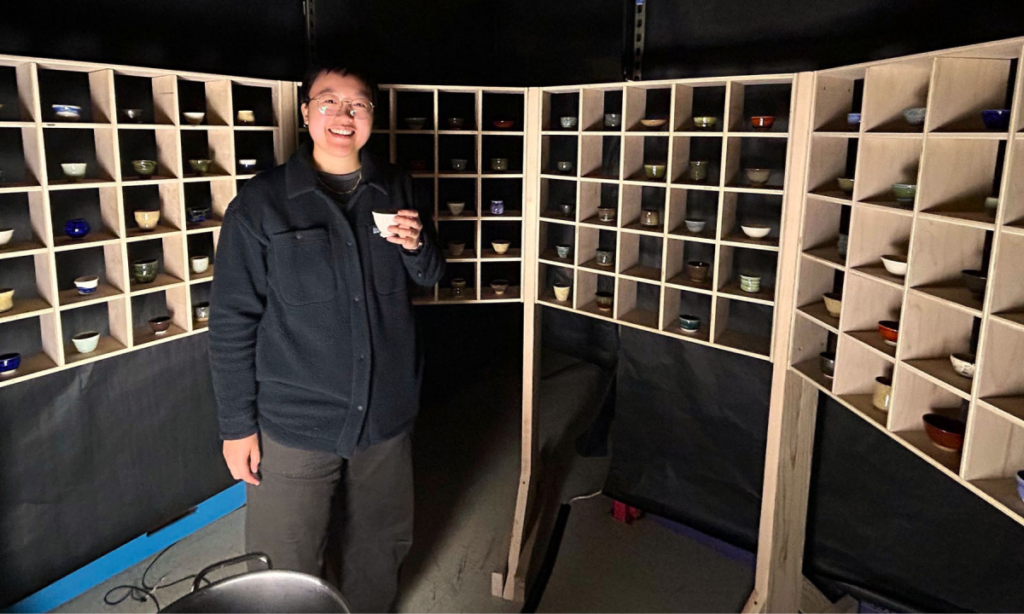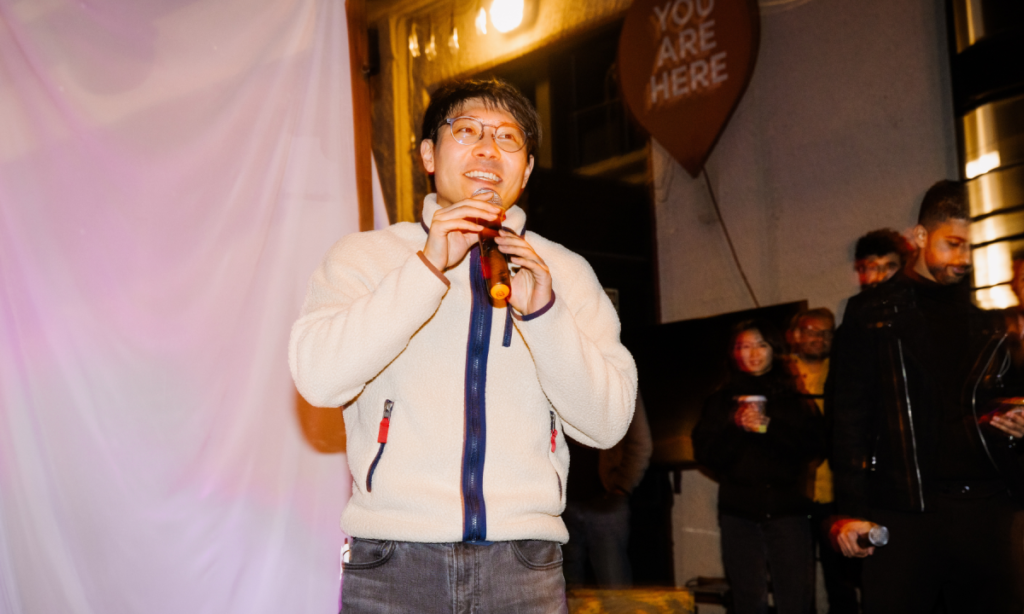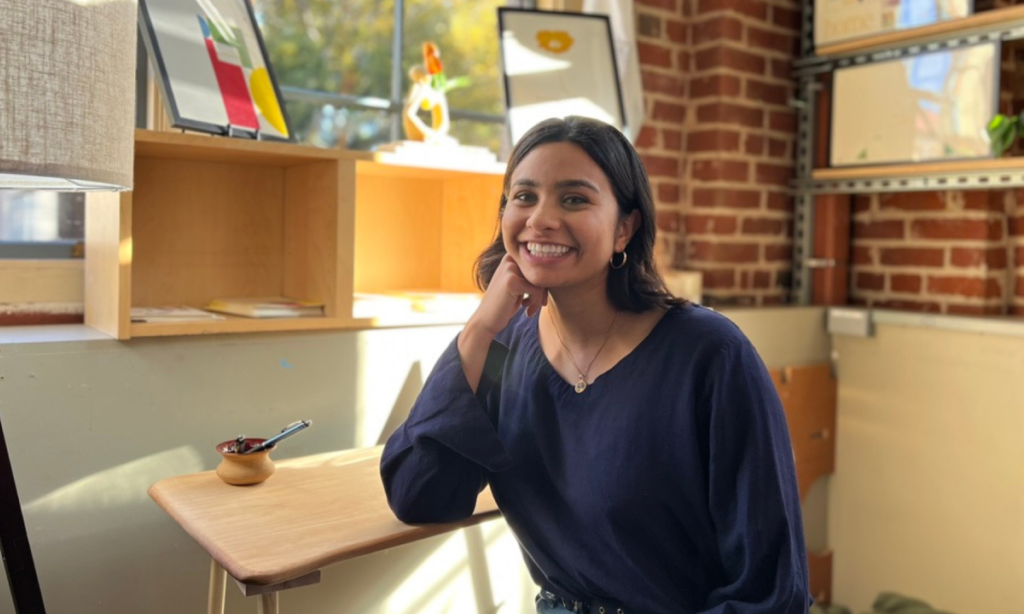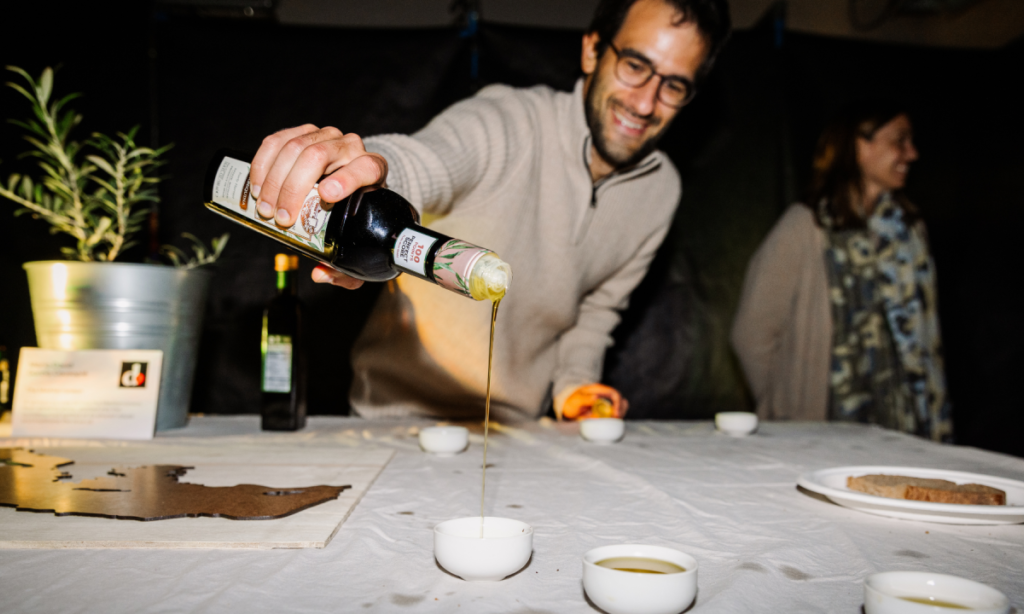
Every year, students develop a Personal Statement: a work that uniquely represents who they are. They then share this work with the rest of the design community on a special Personal Statements Night. This project allows the designers to combine a physical product that is imbued with their emotions and values with a shared user experience.
had he held the Sun by Natalia Chen
Before graduating college, I had a vision for my ideal future. During my senior year, I explored the world of sex tech and knew I wanted to find a way into it. I considered applying to the d.school back then but felt my portfolio wasn’t strong enough, so I shelved the idea, got a job, and tried to build a career.
I worked as a machine learning engineer, splitting my time between collecting data and developing algorithms. While I enjoyed the problem-solving, it always felt like a stepping stone toward my true passion. After a few years, I started researching design programs, wanting to learn how to take a concept and turn it into a product people would actually use. That’s when I returned to the d.school and decided the time was right to apply.
Now my work centers on sexuality and intimacy, with a focus on how our relationships with our bodies and others evolve through life changes. My primary area of interest is menopause—an experience that half the population will go through but remains deeply under-prioritized in healthcare.

How do we advocate for pleasure in perimenopause? What does sexuality look like post-menopause? How do we de-stigmatize these conversations so real progress can happen?
For me, the strength of the Design program lies in the diversity of its students. We come from different backgrounds, experiences, and cultures, each bringing unique perspectives to the table. We’re drawn to different challenges and approach them in our own ways. I deeply admire everyone who has walked through these doors and spent their many sleepless nights here.
It’s rare in life to have the opportunity to work solely for yourself—to develop your own skills, creativity, and passions. It’s even rarer to be in the right headspace to appreciate what a gift that is. Not every day is smooth sailing, nor should it be, but at its core this program has been a risk I’ve taken on myself—to see what I can create with no limitations. We’ll see how that turns out.

Personal Statement: had He Held the Sun
My personal statement was framed around the Māori myth of how Māui caught the sun—a story I heard countless times growing up. I vividly remember Peter Gossage’s retelling, especially the striking illustration of a fiery red sun. In the story, the days are too short because the sun races across the sky. Māui, smart and brave, confronts it with force, ultimately subduing the sun so that it will slow down.
This was one of my favorite stories, yet I always wondered: Why did it have to be so violent? What if the ropes in the story weren’t meant to bind and restrain but to hold and support?
Those questions led me to explore the transformational power of support, alongside themes like finding safety in one’s body, the forms and expressions of rage, beautiful suffering, joy born from pain, and transformation.
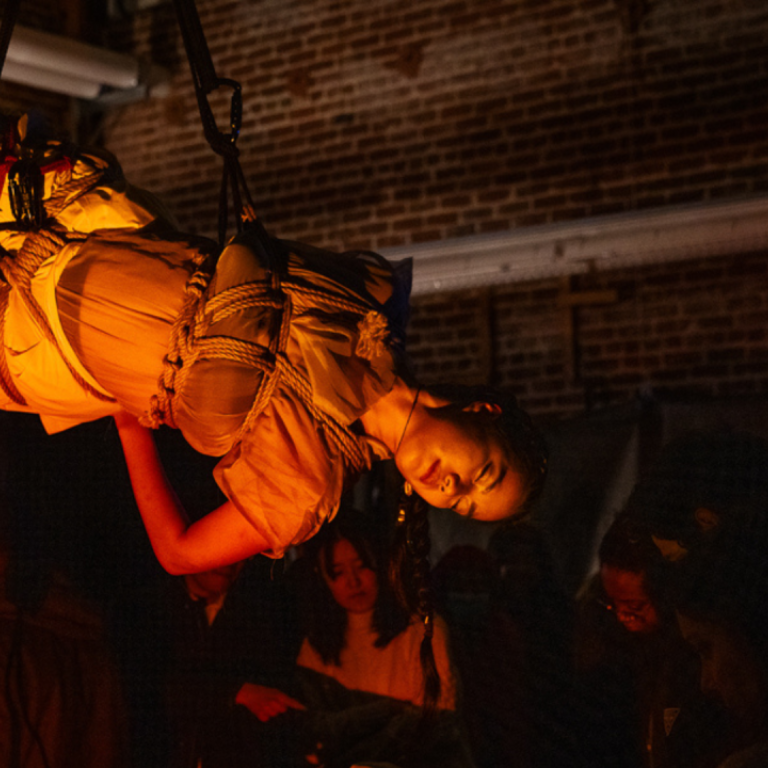
I asked myself, how do you explain what it is to be seen to someone who does not see your full self? To me, the answer has to be something nonverbal. Shibari, the Japanese art of rope bondage, is captivating in the way it reveals raw humanness—it showcases, affirms, and mesmerizes. In its intricate ties, I see a story of intimacy, connection, and being seen.
Process: A Performance to Mirror the Sun
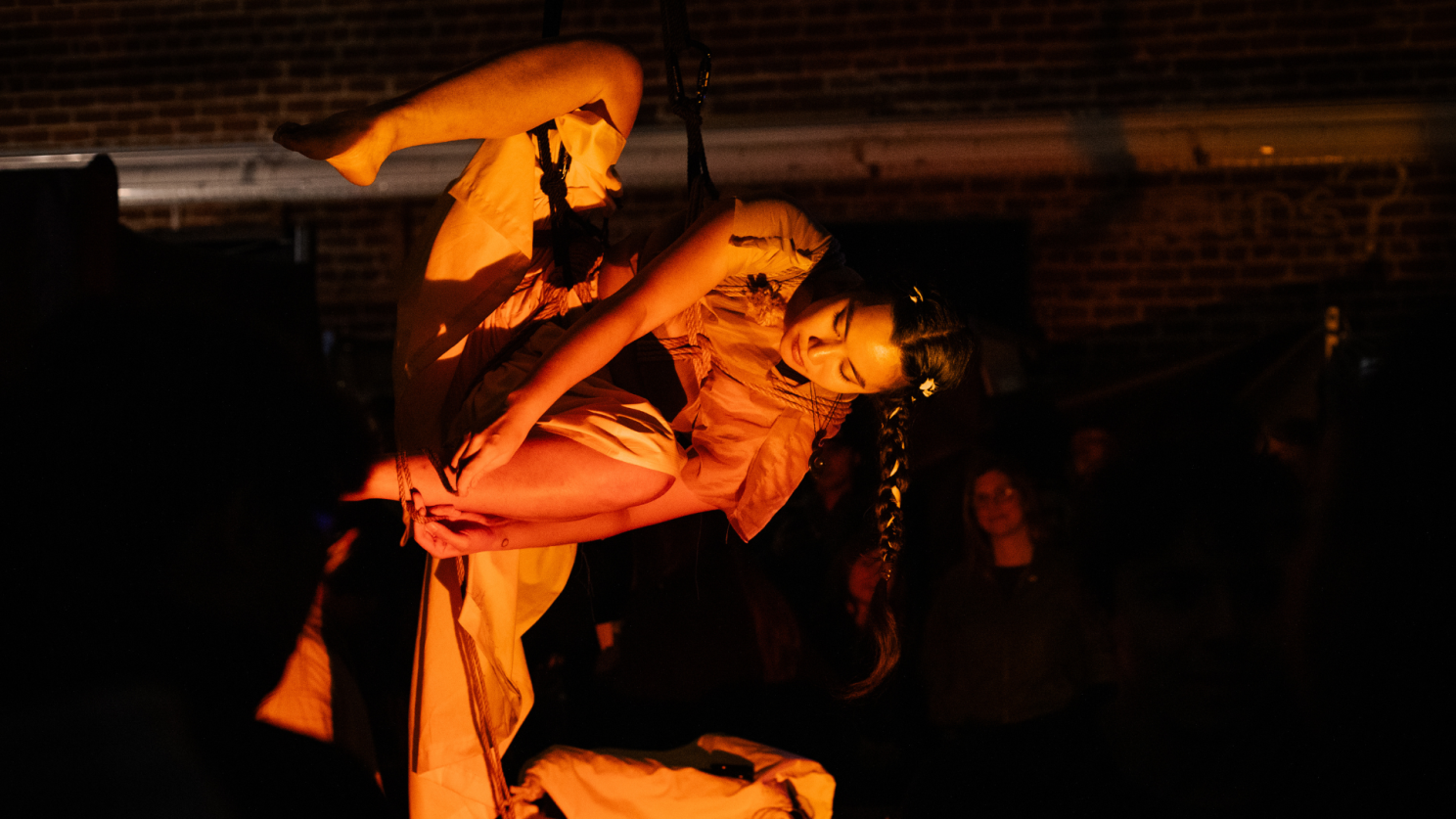
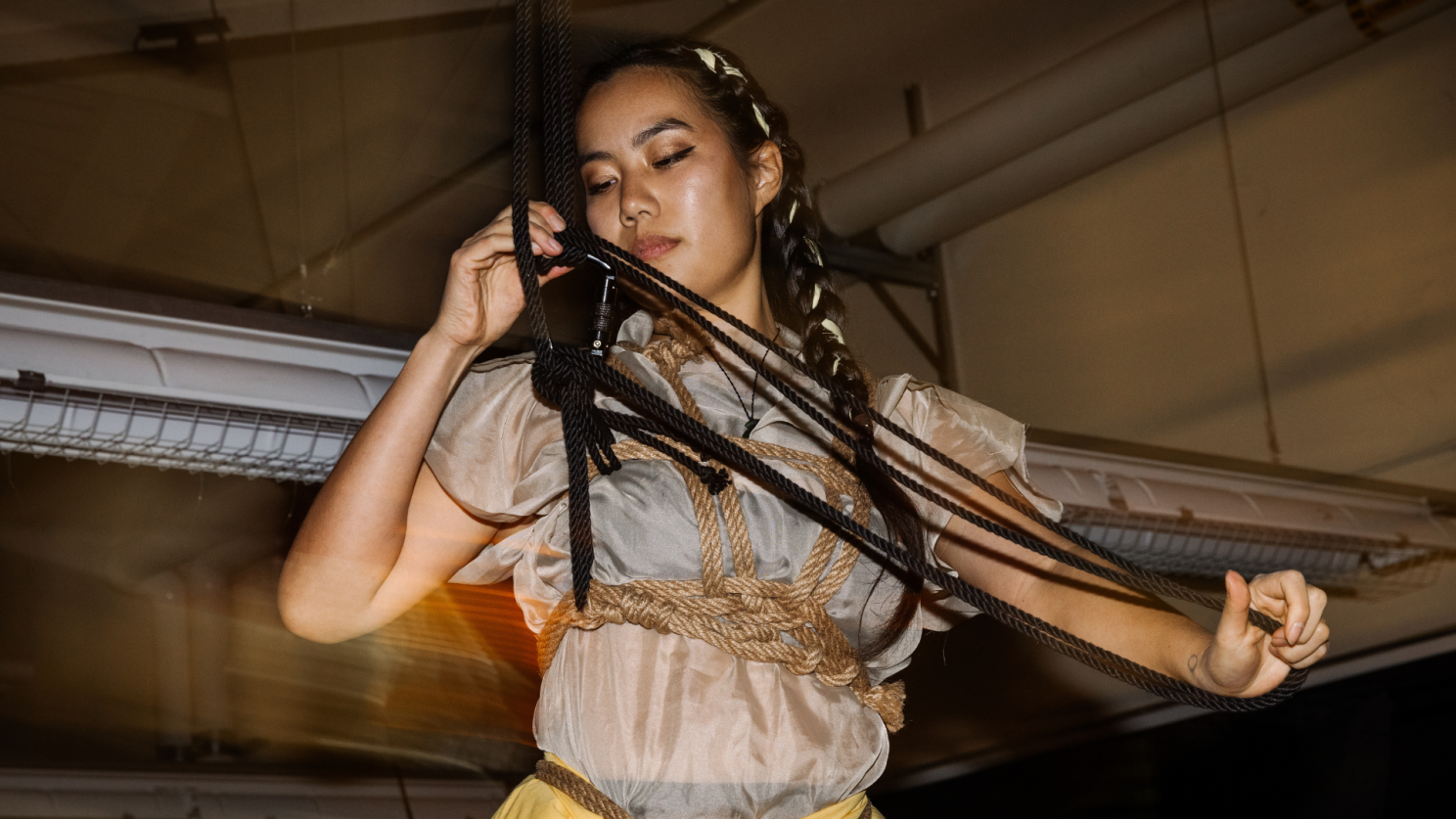
I have always been drawn to ephemeral design—the idea of something happening and then disappearing without a trace fascinates me. In that sense, performance art has always felt like a natural pursuit. I considered filming my performance but ultimately decided against it. Letting it remain unrecorded allowed me to take more risks, sink deeper into the somatic experience of rope tying, and ultimately deliver a freer, more embodied performance.
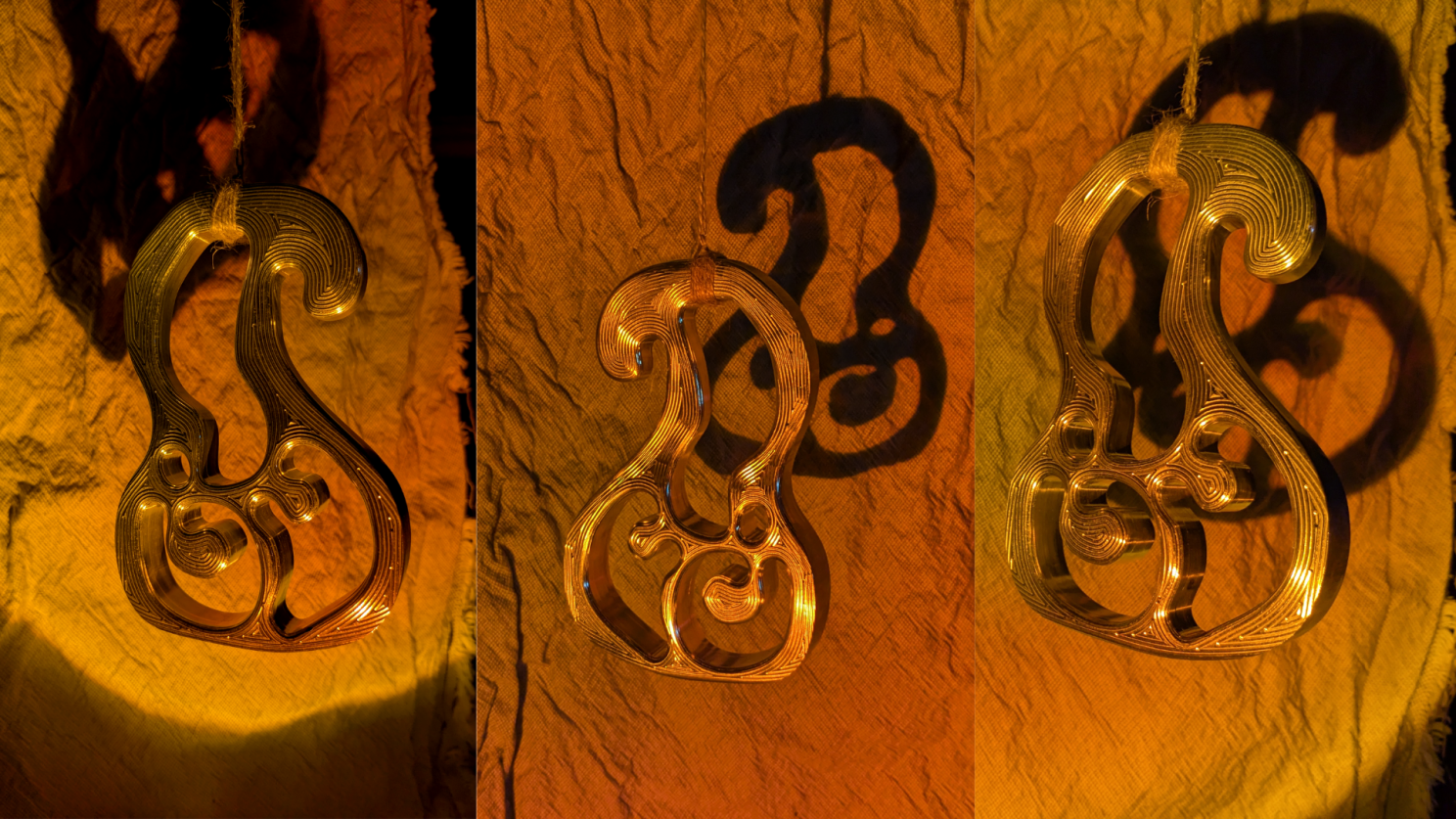
I created multiple artifacts for the performance, the most labor-intensive being the bracket I hung from. I machined a fishhook (hei matau) from aluminum, carefully considering the forces it needed to withstand. I also took into account the technical requirements for rope placement and the imagery I wanted to incorporate—such as koru motifs and striations along the bracket surface.
I also sewed the clothing I wore, leaning into my fascination with how different fabrics bunch and fold under rope. Since Shibari rope is often placed directly on the skin, I wanted to recreate that aesthetic while keeping it appropriate for the setting.
The final element was lighting and projection. I designed a visually-reactive animation that responded to my motion, projecting onto my body whenever I moved. My goal was to create the organic illusion of fire erupting across me—mirroring the way a sun might behave.
Impact: The Joy of Making Work that Resonates
Coming into my second year, I wanted to experiment with the idea of following my body—letting my body lead me in whatever direction felt right. Personal Statements is the first body of work where I truly feel I’ve done that. Creating something that resonates so deeply with me has been a joy unlike anything I’ve experienced before. In many ways, I may be chasing that feeling in everything I create moving forward.