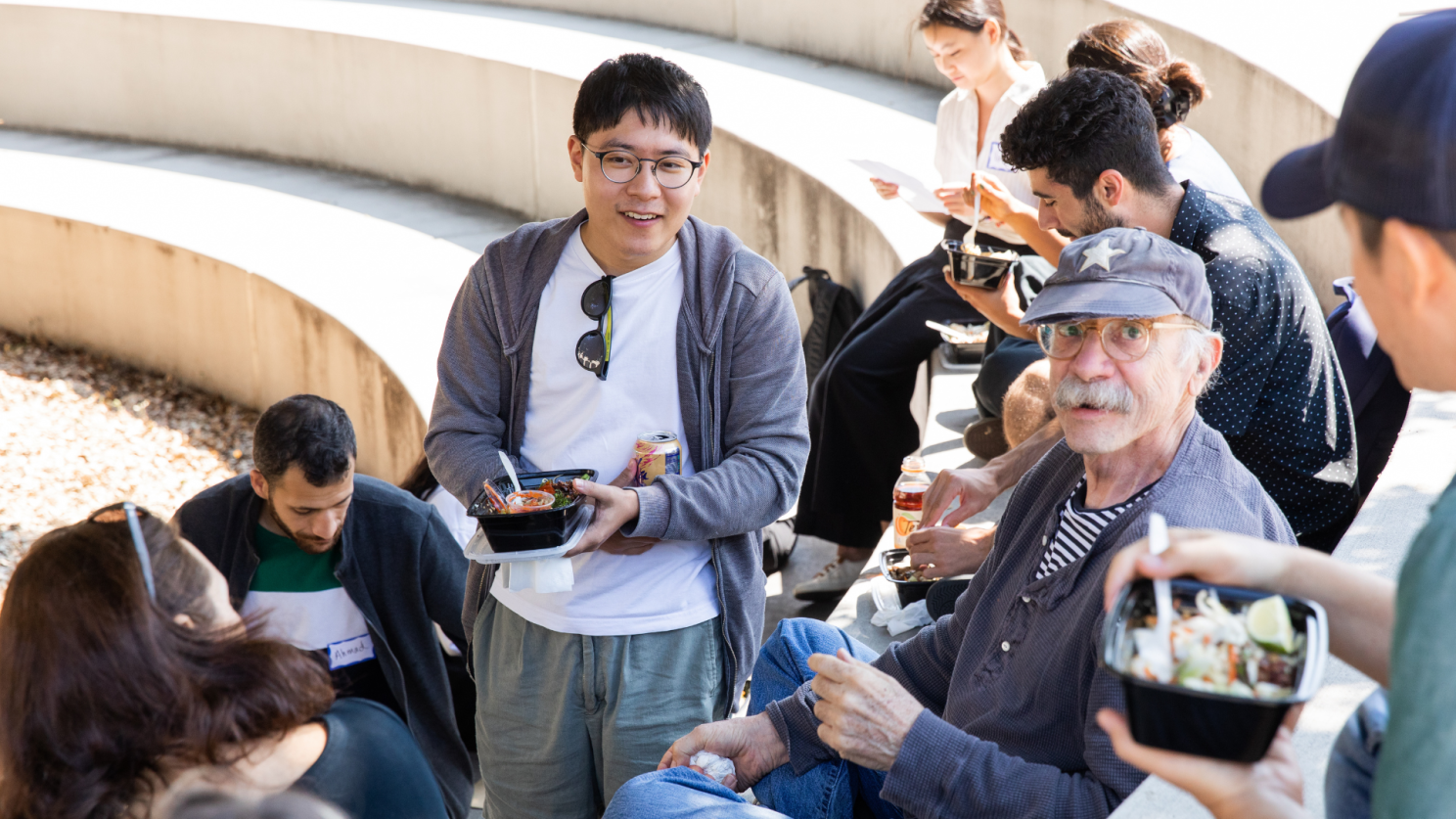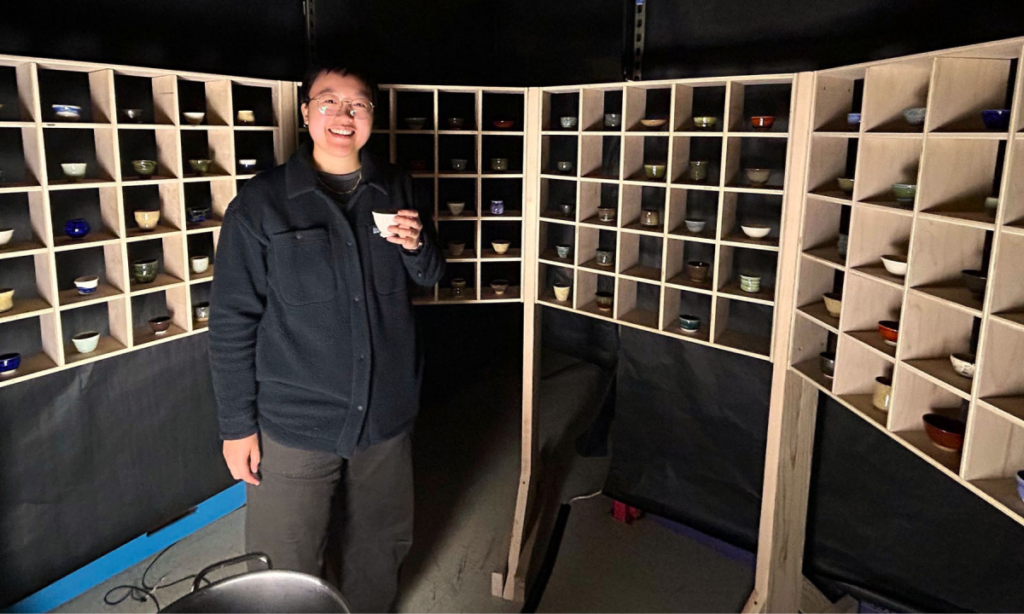
Every year, students develop a Personal Statement: a work that uniquely represents who they are. They then share this work with the rest of the design community on a special Personal Statements Night. This project allows the designers to combine a physical product that is imbued with their emotions and values with a shared user experience.
Flowing Light by Koh Terai
I work at the intersection of domains. At these intersections, I find unique forms of expression to make the world a better place. Beauty, excellence, and creativity guide my work.
I came to Stanford to expand my perspective—to explore unexpected connections and develop new ways of seeing the world. My current focus is on creating novel aesthetic experiences that bring people together.
My experience with the MS Design program has been phenomenal. The flexibility and diversity of the Design Program have helped me refine and reshape how I see and interact with the world. I've taken classes across the Business School, Computer Science, Design, Mechanical Engineering, Theater, and Psychology departments. The breadth that I can explore through the design program is truly beautiful. Most classes have given me a new lens through which to see the world, to help me find new ways of expressing myself, and to help me add value to the world.
Most importantly, the people I've met have been incredible. My classmates at the Loft and the faculty at the d.School and beyond have given me fresh perspectives and invaluable experiences. I feel lucky to be surrounded by such talented and inspiring individuals.
Personal Statement: Flowing Light
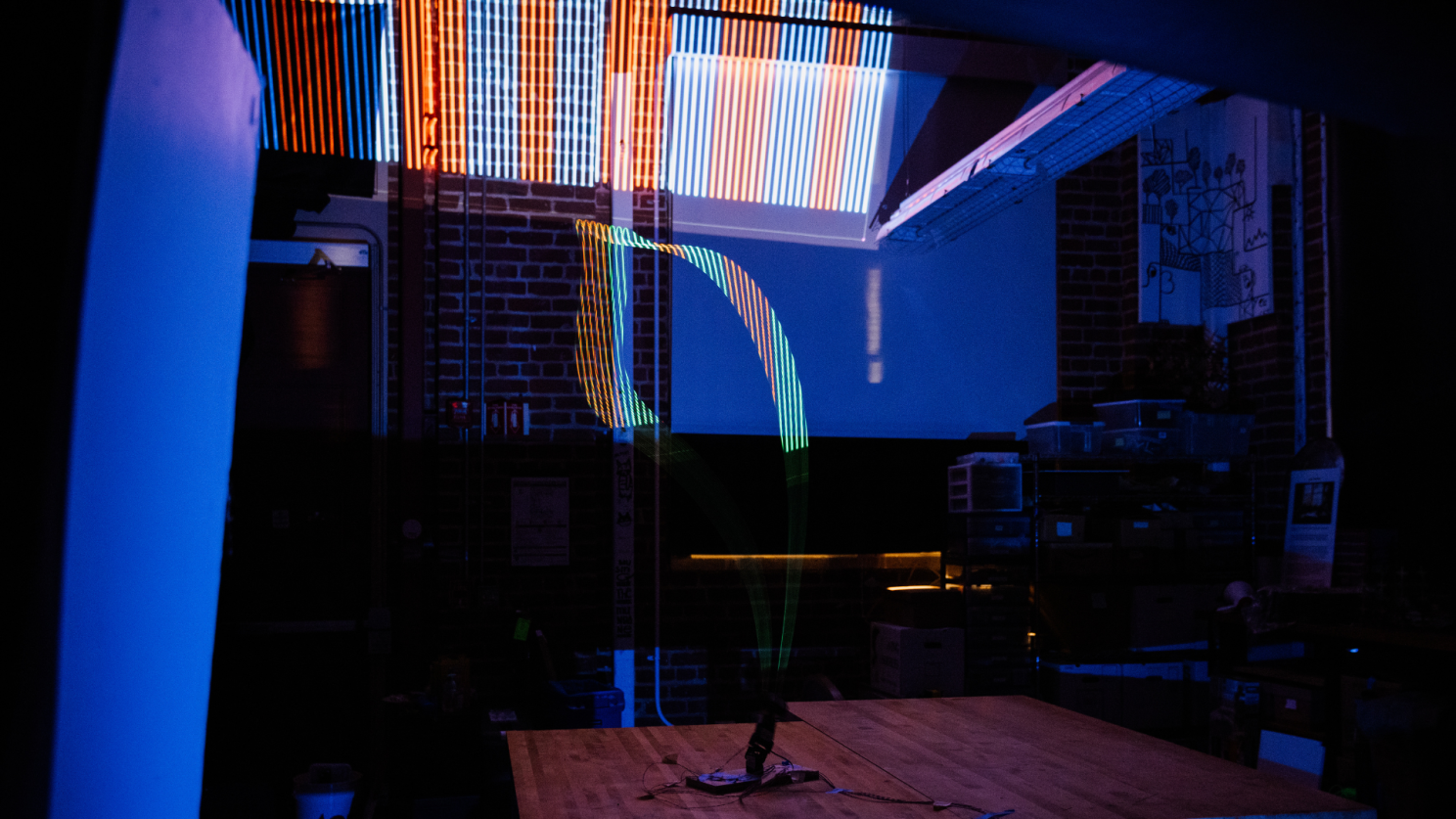
Personal Statements have no strict prompt—it's an opportunity to create anything personally meaningful. I set out to create a novel aesthetic experience involving light. Specifically, I wanted to see if I could artfully "choreograph" light.
My curiosity began in March 2024 when I first experienced Disney's World of Color musical fountain show at California Adventure. How they used water to sculpt light captivated me and left me in awe. I wondered, If modern fountain shows use water to shape light, what other mediums could I explore to manipulate light?
Looking to nature for inspiration, I studied phenomena like nacreous clouds and sun dogs, subtly transforming sunlight through refraction and creating surreal images in the sky. This sparked a parallel question—rather than physically manipulating light, what if I altered how the "eye" perceives it? For example, I knew lasers produced striking effects when viewed through digital cameras due to the rolling shutter phenomenon since digital sensors "see" differently from our eyes.
My work in projection design with Stanford's theater department reinforced this curiosity of manipulating light. I began seeing projectors not just as image sources but as tools capable of directing millions of individual light beams 60 times a second. A visit to Anthony McCall's exhibition in London over winter break further solidified my perspective—demonstrating how projectors could sculpt light into spatial, tangible experiences. Additionally, Stanford faculty John Edmark's kinetic work and creative philosophy also played a role, encouraging fearless exploration. His guidance helped shape my artistic approach.
Over winter break, inspiration struck. While toy shopping for my friend's children's Christmas Gift, I saw a store attendant demonstrating a "string shooter" toy. The way the string moved felt unintuitive and magical. At that moment, my fascination with fountain shows, choreographic light, projection design, kinetic objects, and visual storytelling merged into a single idea: What if I could choreograph these strings in a novel way, creating an entirely new aesthetic experience?
Process: Finding a Visual Vocabulary
I started with an off-the-shelf string shooter to understand its mechanics, then experimented with lighting and projections to create visual effects. Once I discovered the core visual vocabulary, I built the necessary hardware and coded the software to bring the concept to life.
From the outset, I envisioned the final piece as an immersive audiovisual installation that would engage viewers beyond sight. The process required a fusion of disciplines: hardware, software, storytelling, audio design, and spatial composition, with each playing a critical role in shaping the final experience.
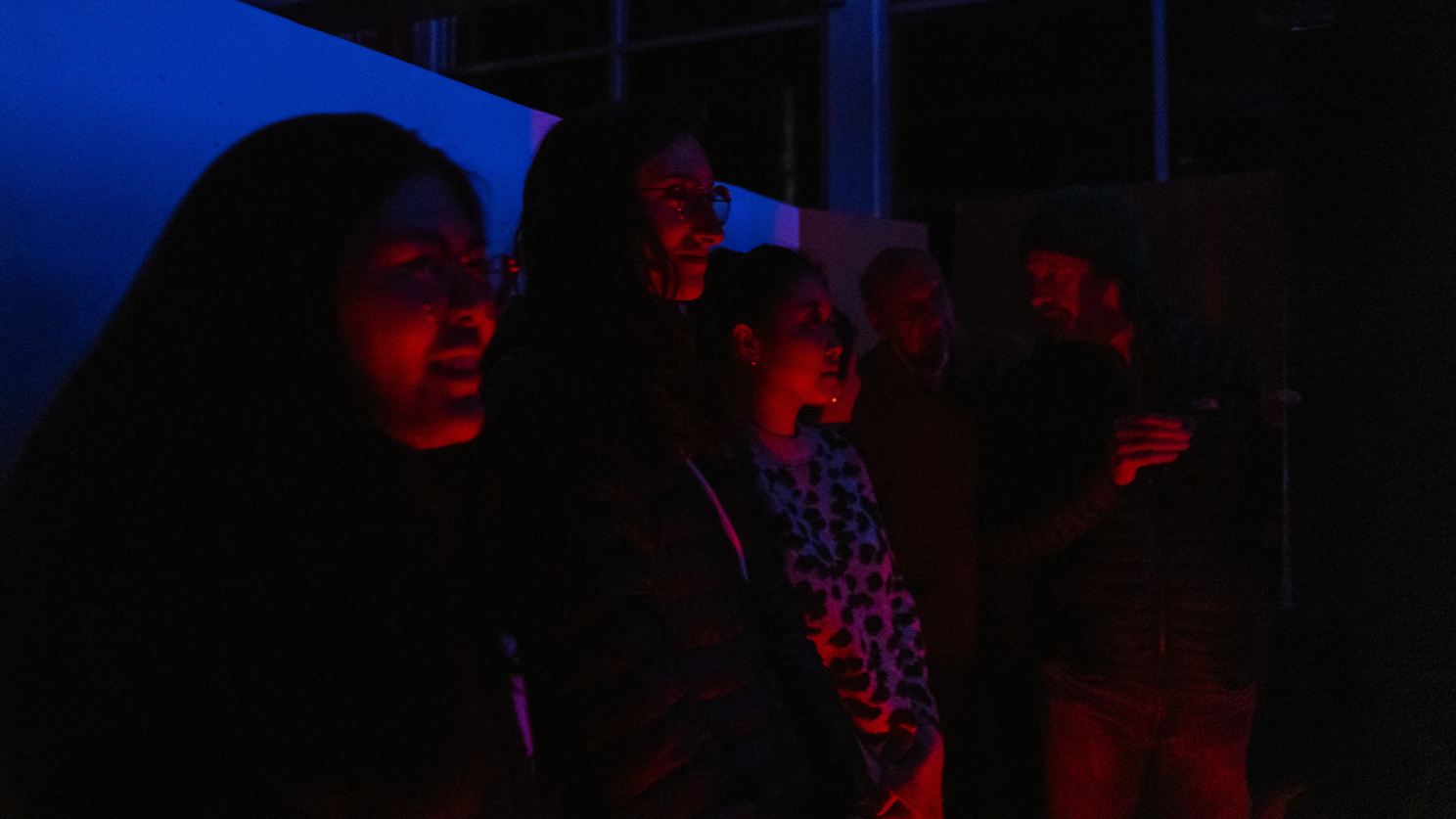
Seeing people line up to interact with my work on Personal Statements night was incredibly rewarding. I loved watching their curiosity unfold as they tried to make sense of what they were seeing—experiencing firsthand the wonder that initially inspired me watching the World of Color fountain show at Disney.


Impact: The Confidence to Take Creative Risks
This project is a culmination of the creative mindset I've developed in the program. The openness of the MS Design program and the unique talents of those around me have given me the freedom to pursue ideas I wouldn't have otherwise. Whether it was carving a 524-pound pumpkin with classmates on Halloween or experimenting with light sculptures in David Kelley and Scott Doorley’s Advanced Creative Studies, each experience has contributed to my growth. My academic advisor, Carissa Carter has always been incredibly supportive of my following my curiosities, even when they don’t seem perfectly logical at the moment. My personal statement project reflects this environment—one that fosters experimentation, risk-taking, and celebrates unexpected intersections.
I'm deeply grateful to the Design program and the Loftees for helping bring this project to life. Much like my experience in the MS Design program, this project reaffirmed my belief that the most compelling results arise where disciplines collide — where technology, art, and storytelling seamlessly blend, and bold experimentation thrives.
As I move forward, I want to continue working at these intersections, discovering new forms of expression that improve the world. Stanford's open, experimental environment has given me the confidence to take creative risks and think beyond traditional disciplines. It's a mindset I'll carry with me long after this program ends, and I'm excited to see where this path leads next.