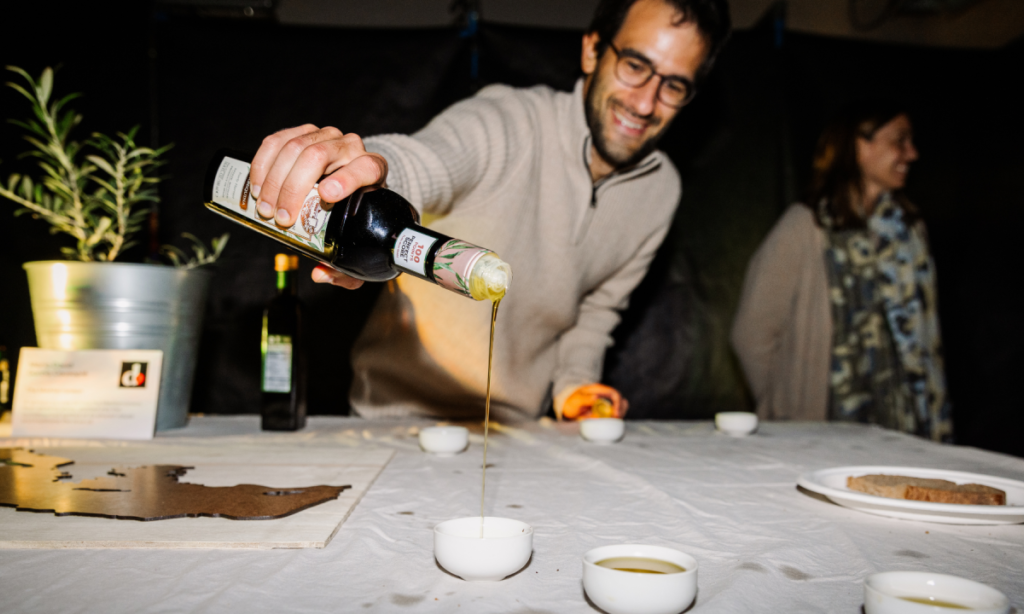
Every year, students develop a Personal Statement: a work that uniquely represents who they are. They then share this work with the rest of the design community on a special Personal Statements Night. This project allows the designers to combine a physical product that is imbued with their emotions and values with a shared user experience.
A Corner of One’s Own by Izma Shabbir
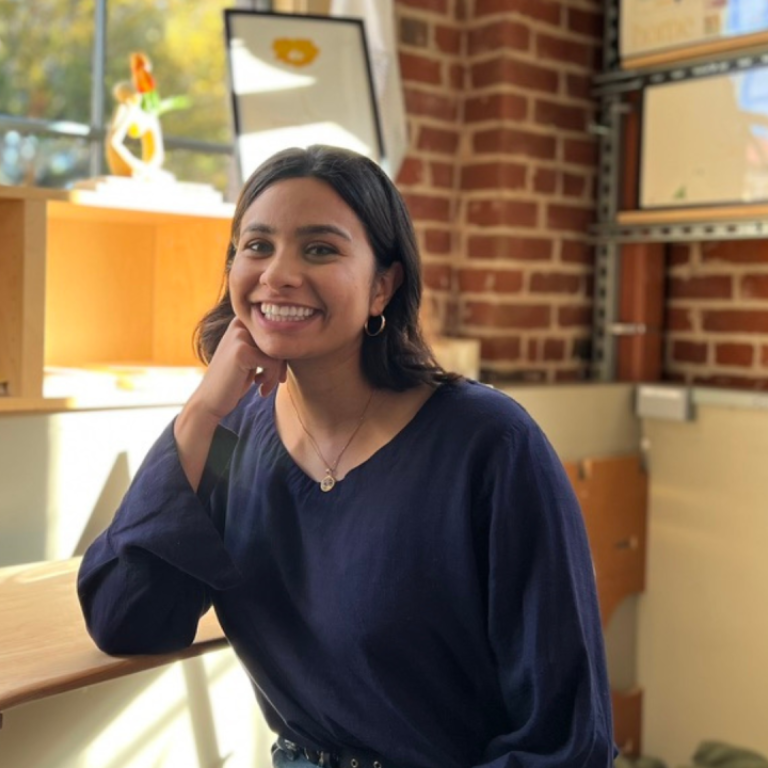
Before Stanford, I studied Economics at the University of Southern California (fight on!) and worked in the media/entertainment industry for five years. I began my career as a consultant at Qvest.US, building media streaming products for various studios across the film, television, and music space. I then dove deeper into the industry, specifically music streaming, when I joined Amazon Music as a technical product manager. Essentially, my work connected music licensing, industry, and royalties requirements to our technical products.
Somewhere along the way, especially after the pandemic hit, I was really craving working more closely with my community and in a more creative way. I had always loved graphic design, and started working with community members and friends on designing the brands and visuals for their own side projects. I resonated deeply with the side projects my community members were pursuing—building community organizations, supporting political campaigns, starting small-scale businesses—but I felt that without adequate branding and visuals, their impact was lost. This was the beginning of my freelance practice, which I feel very lucky to still run today!
At this point, it was clear to me that I needed to blend my technical career with my creative freelance practice. I realized that design and product did not need to be so bifurcated in my life. It felt like graduate school made sense as a way to bridge the gap between the two.
I’ve focused my studies here on physical design and human behavior. Honestly, digital and two-dimensional design feel like a space I’ll always be exposed to and continue learning in, but physical design does not feel as accessible after school. I wanted to explore three-dimensional design, develop the visual language for physical products, and learn how to work in the machine shops. I’ve been able to build projects that I never would have thought I would have been able to prior to Stanford, and explore design through new mediums, like wood, metal, and 3D printing.
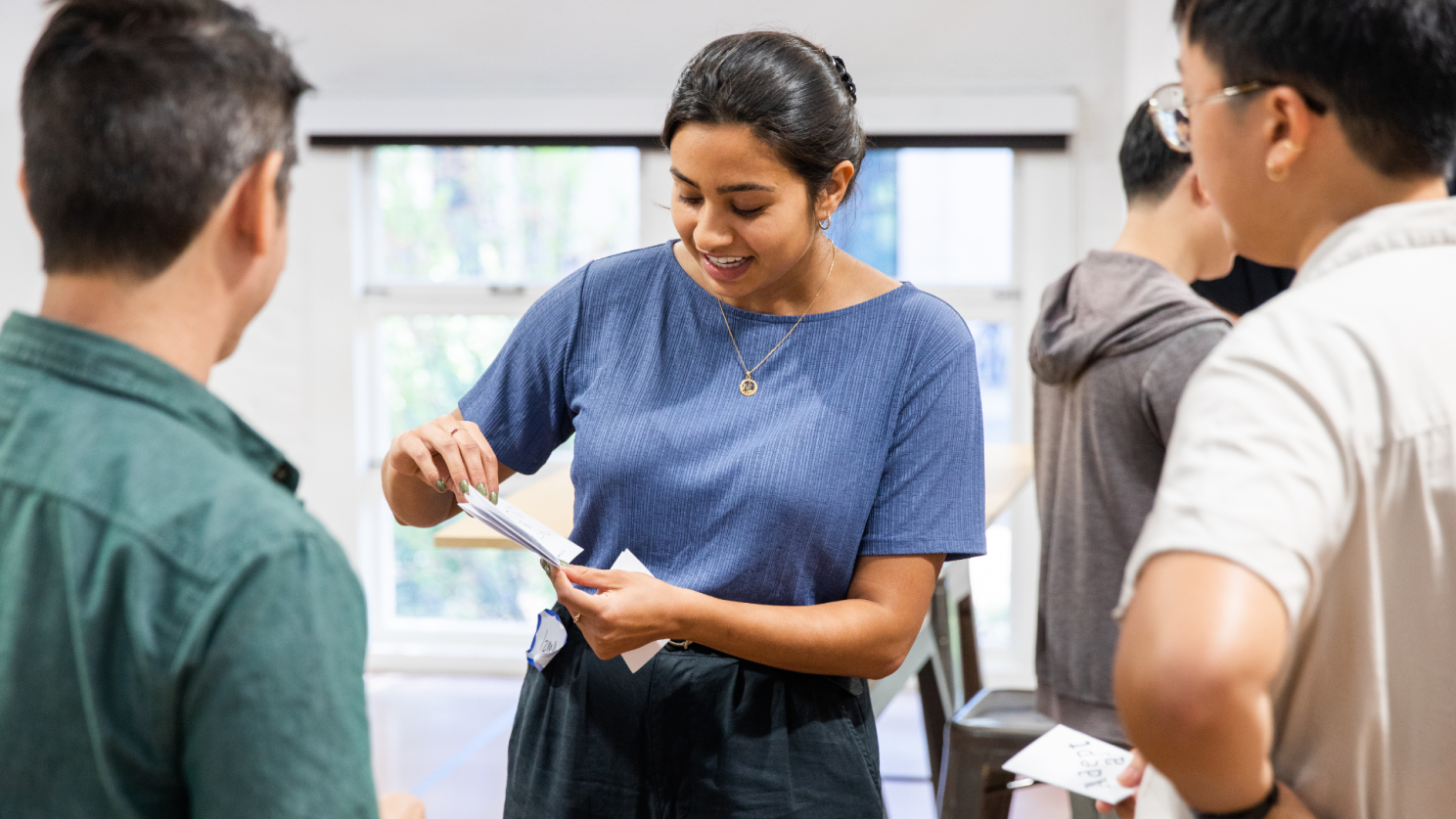
This program has been filled with many learnings—both tangible skills and intangible life lessons. I’ve learned a lot about myself as a person, designer, and maker. In my first year, I worked on physical design projects through classes like Design & Manufacturing and Advanced Creative Studies; learned how to create risograph prints from Patrick Fenton and Owen Hipwell; and applied design, product, and needfinding through Biodesign. Within the Biodesign program, I was part of a group of two designers and two physicians to examine medical need areas—our need area was pelvic organ prolapse. We spent six months interviewing patients, physicians, and physical therapists to hear their stories and learn. This culminated in a provisional patent on a prolapse innovation we co-designed. This was a long process during my first year, but a wonderful and tangible way to apply the design process in an empathetic and grounded way to support an often overlooked group in medicine: women. Our group won funding to continue the work during the summer. Biodesign was a large part of my first year, and I’m grateful to have taken the course.
Personal Statement: A Corner of One’s Own
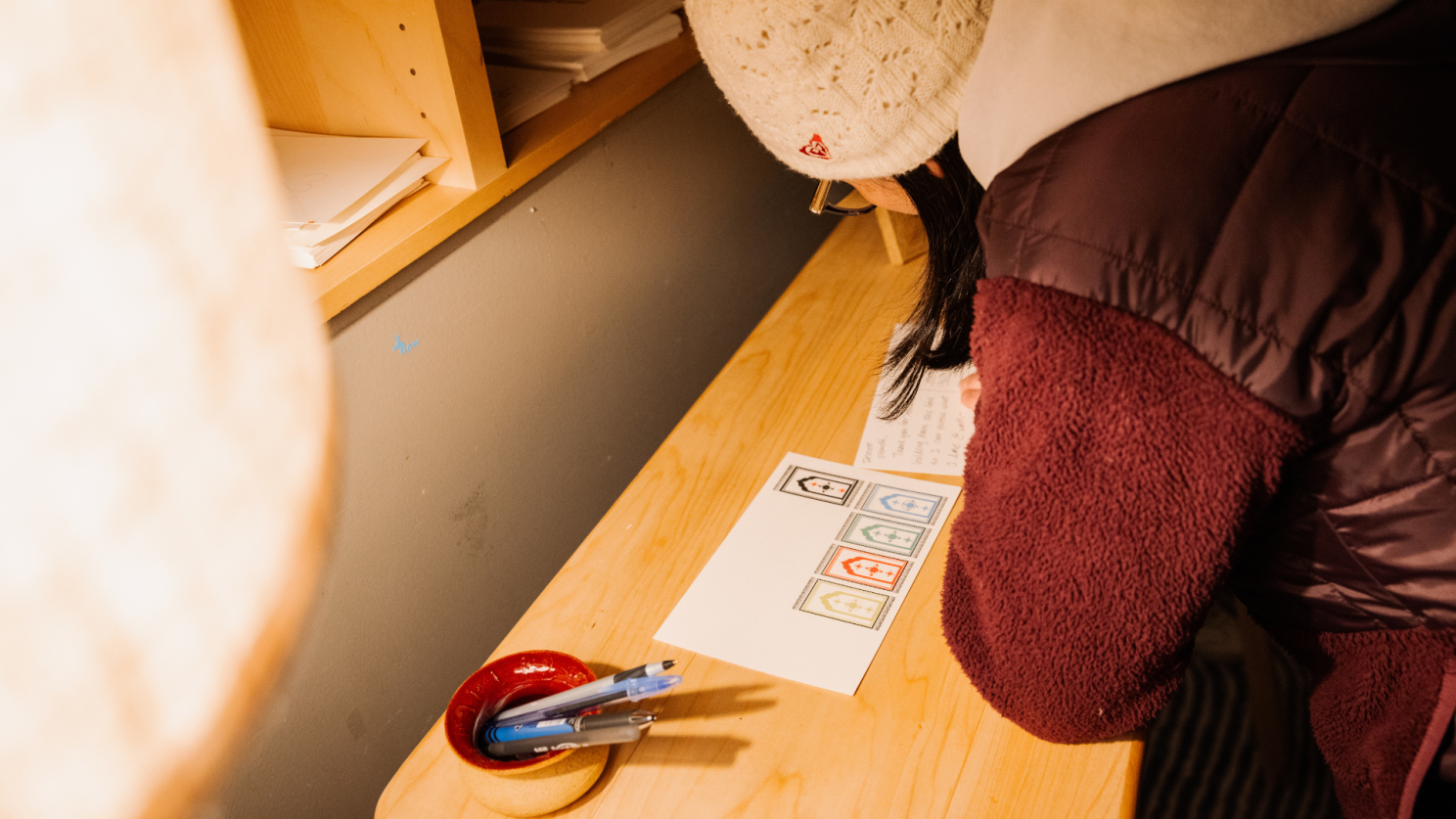
The goal of my personal statement was to build a cozy and peaceful experience that encourages reflection and gratitude. I’m a staunch believer in the power of writing letters and thanking the people in your life who have made any impact on you. We were given a fairly exploratory prompt for the projects—I interpreted it as a call to design something that represented our essence as a designer.
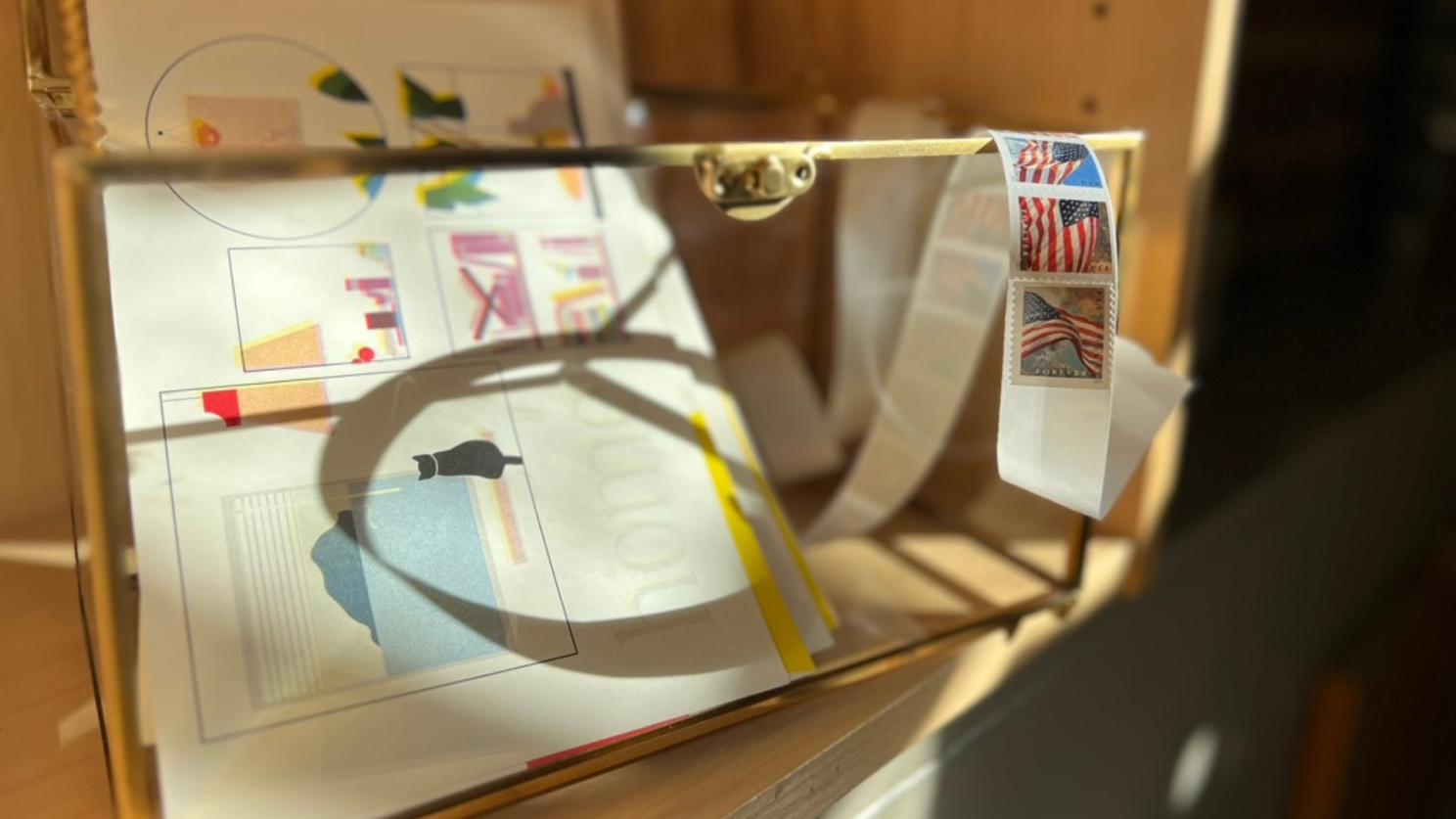
I journaled a lot prior to coming up with an idea. What were my values as a designer? What activities made me feel most like myself? How did I want visitors to feel when they left my project? I kept landing on a few key components: digital design, print media, writing, letters, reflections, gratitude. I wanted to incorporate skills I felt like I came into the program with, as well as new skills. I doubled down on woodworking and furniture design to build a writing table and desk, and built the experience around those pieces.
A huge part of my design process is always talking through ideas with Kavya (a fellow "Loftee")—she pushes me to reflect deeper and make meaningful work. Having Kavya as a sounding board who I trust has been one of the luckiest parts of the program for me.
In the end, this was the prompt I left for each visitor:
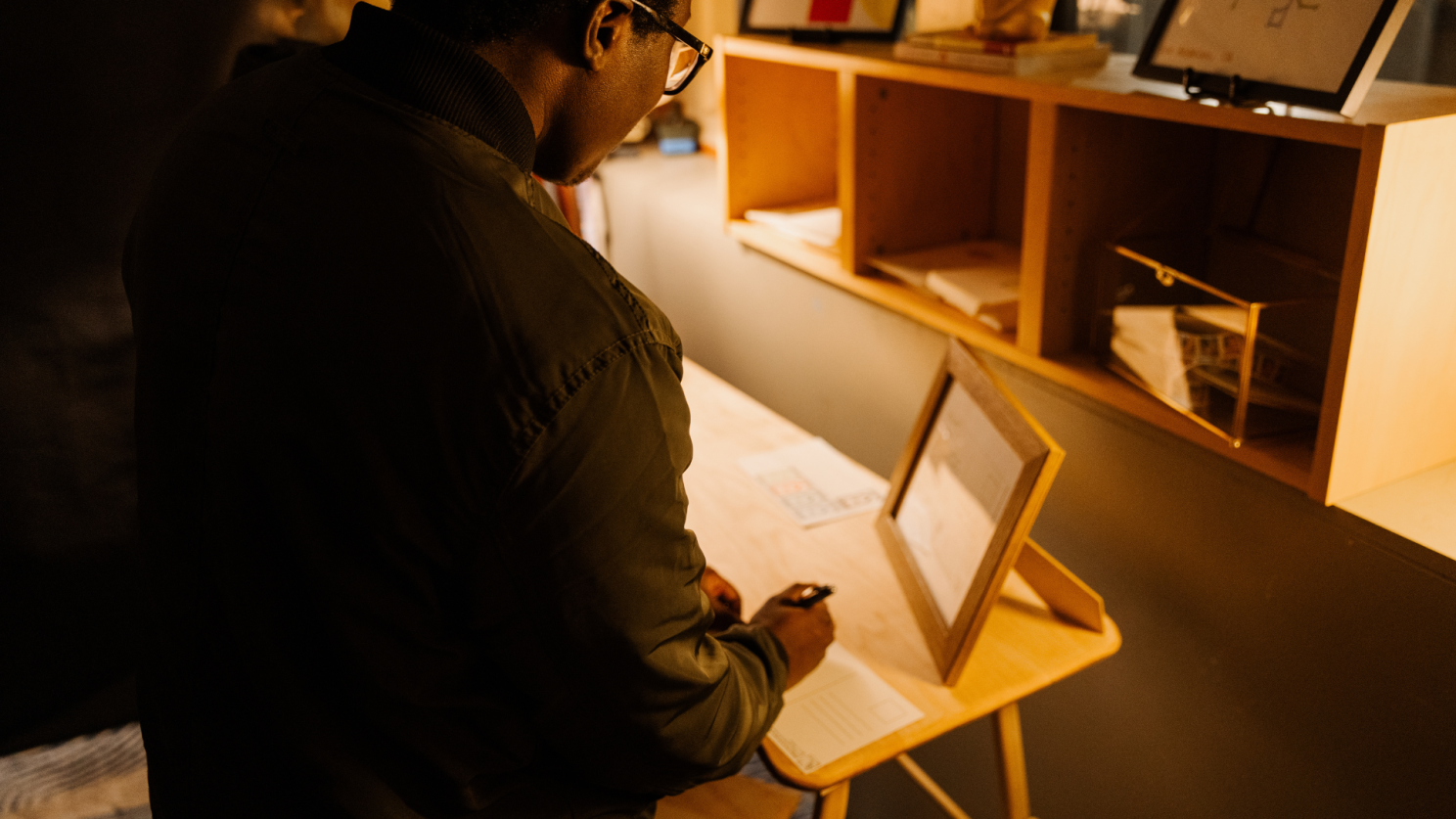
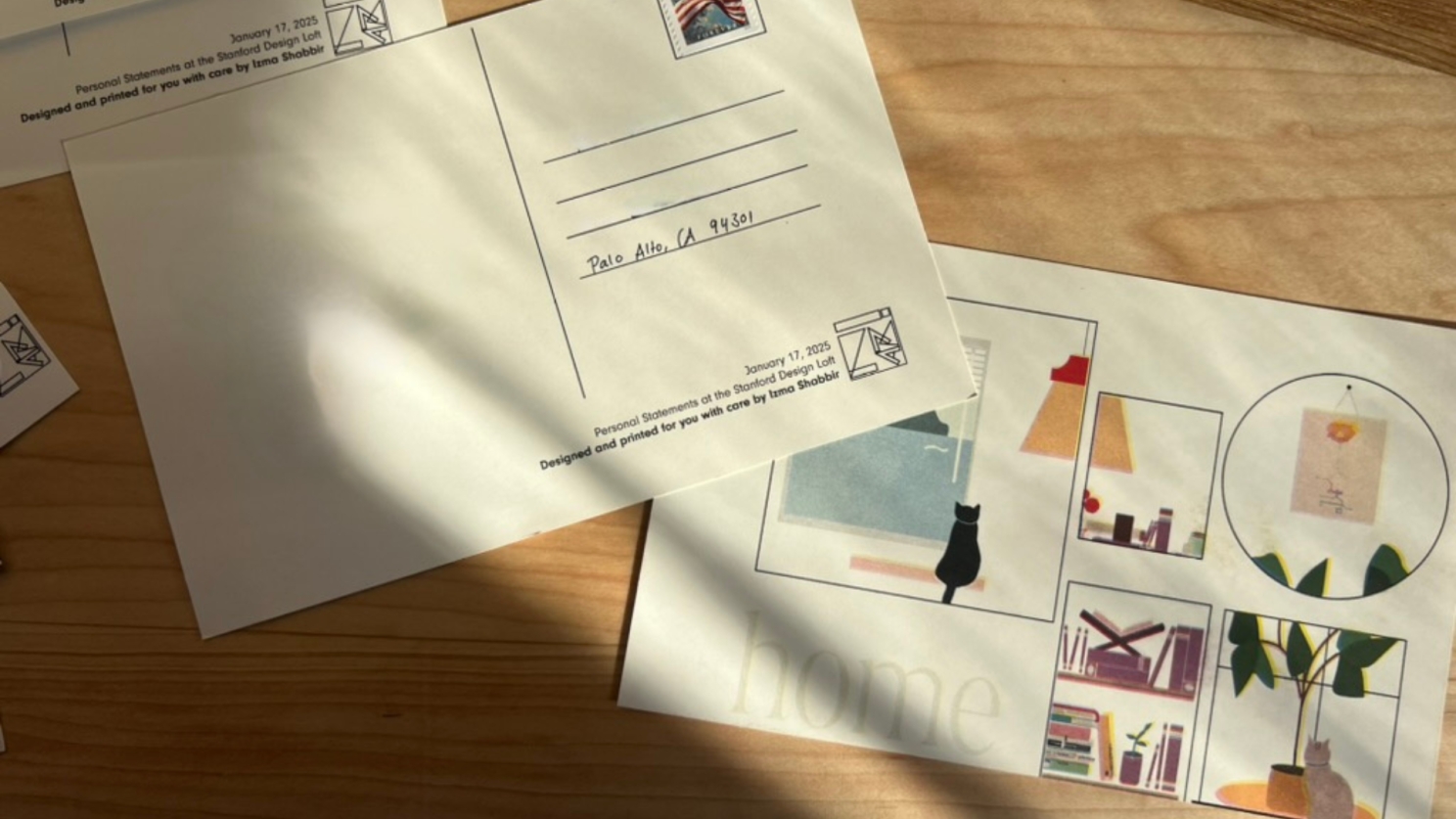
I invite you to write the letter you always meant to send — share the impact someone has had on you, offer an apology, or say what you've always wanted to say. You can either hand it to them directly or leave it in the box — stamped and addressed — to be mailed.
This installation is dedicated to my mother, who has always made sure I have a dedicated place to write and reflect.
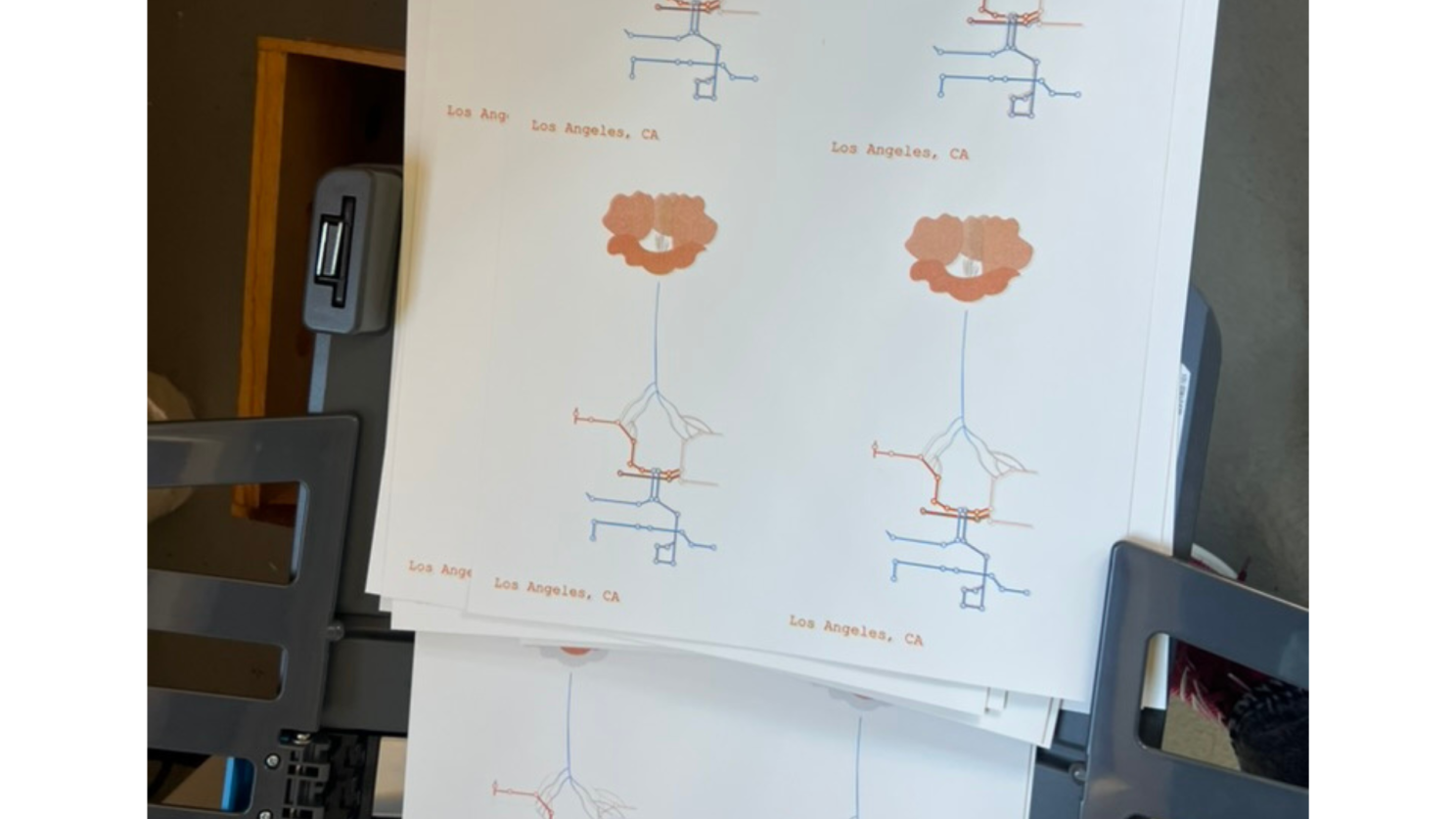
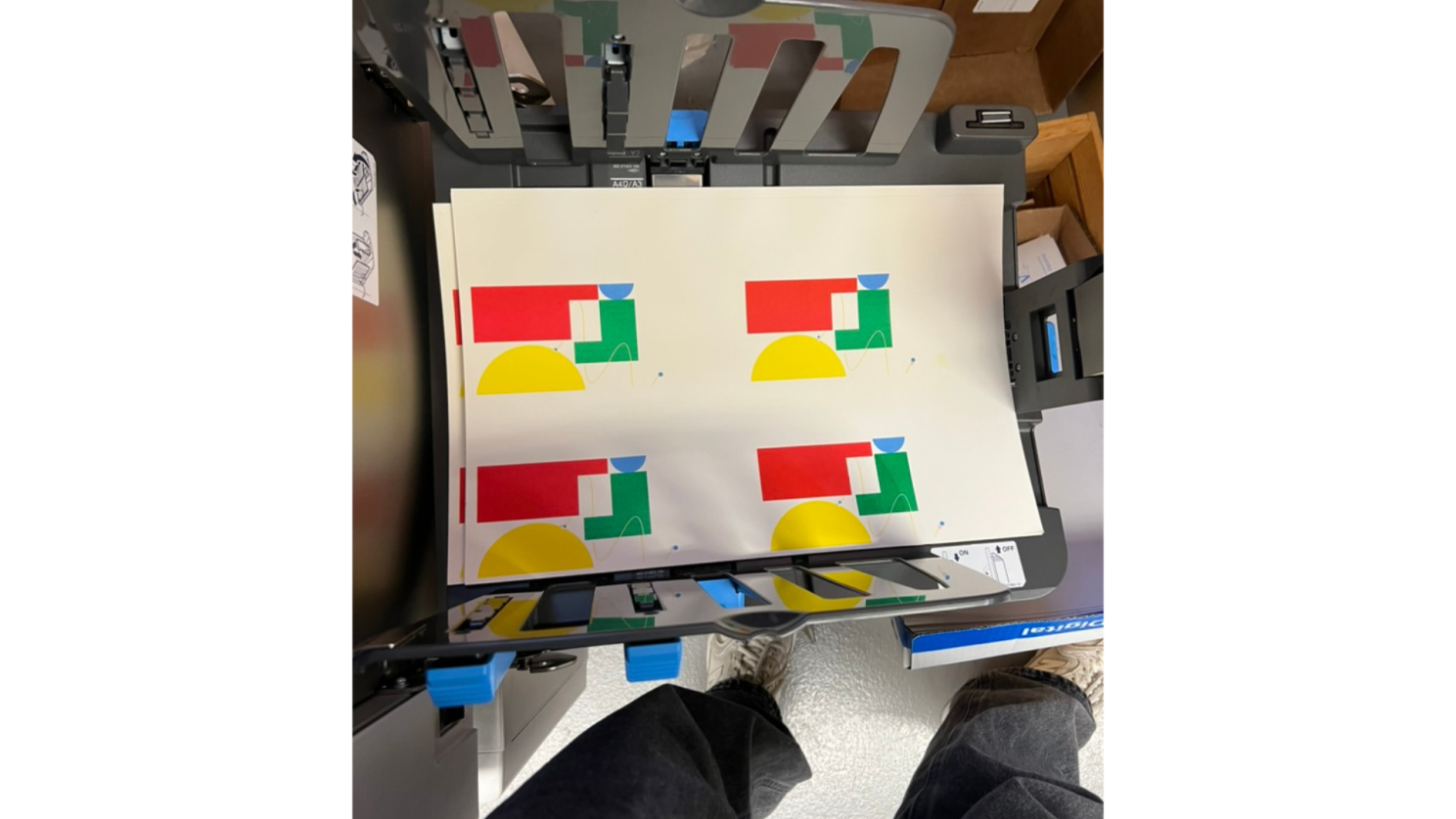
I created a maple writing desk and writing stool, designed five posters, and risograph printed postcards out of each design. Special thanks to Nick Hoversten for all the support and guidance with furniture design. Thank you to Koh Terai for taking photos of my work and making me laugh!
Impact
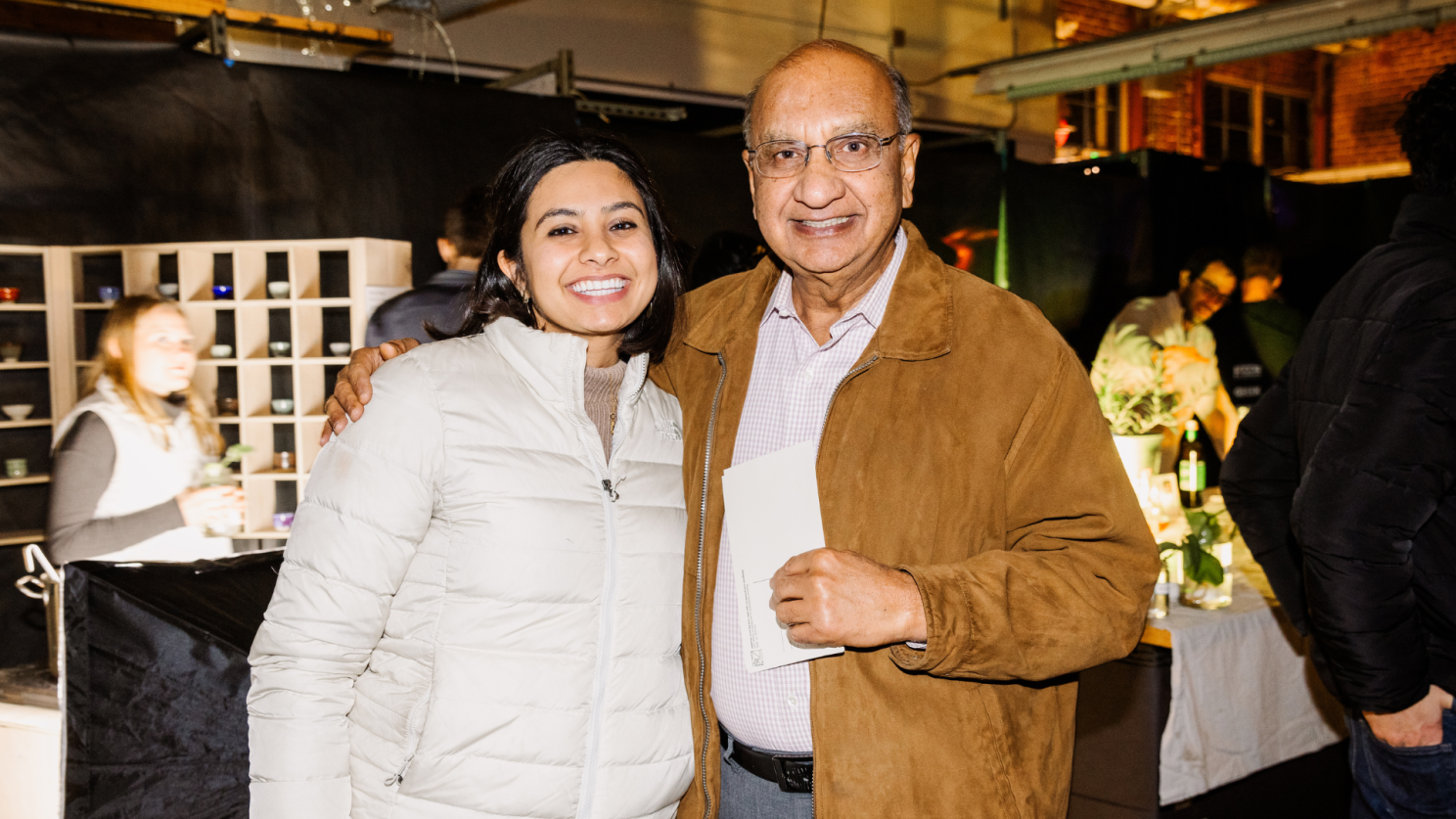
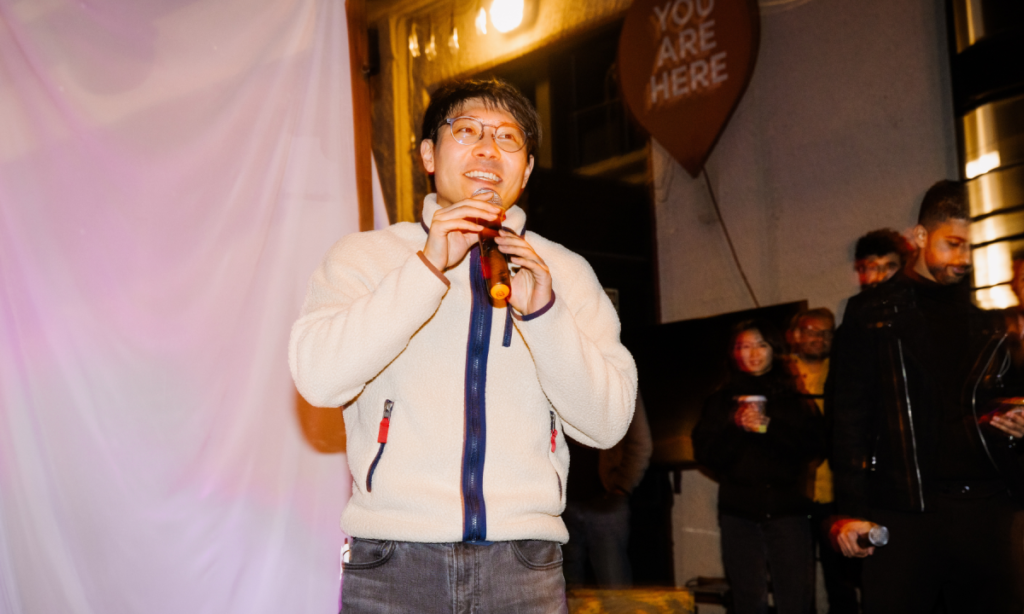
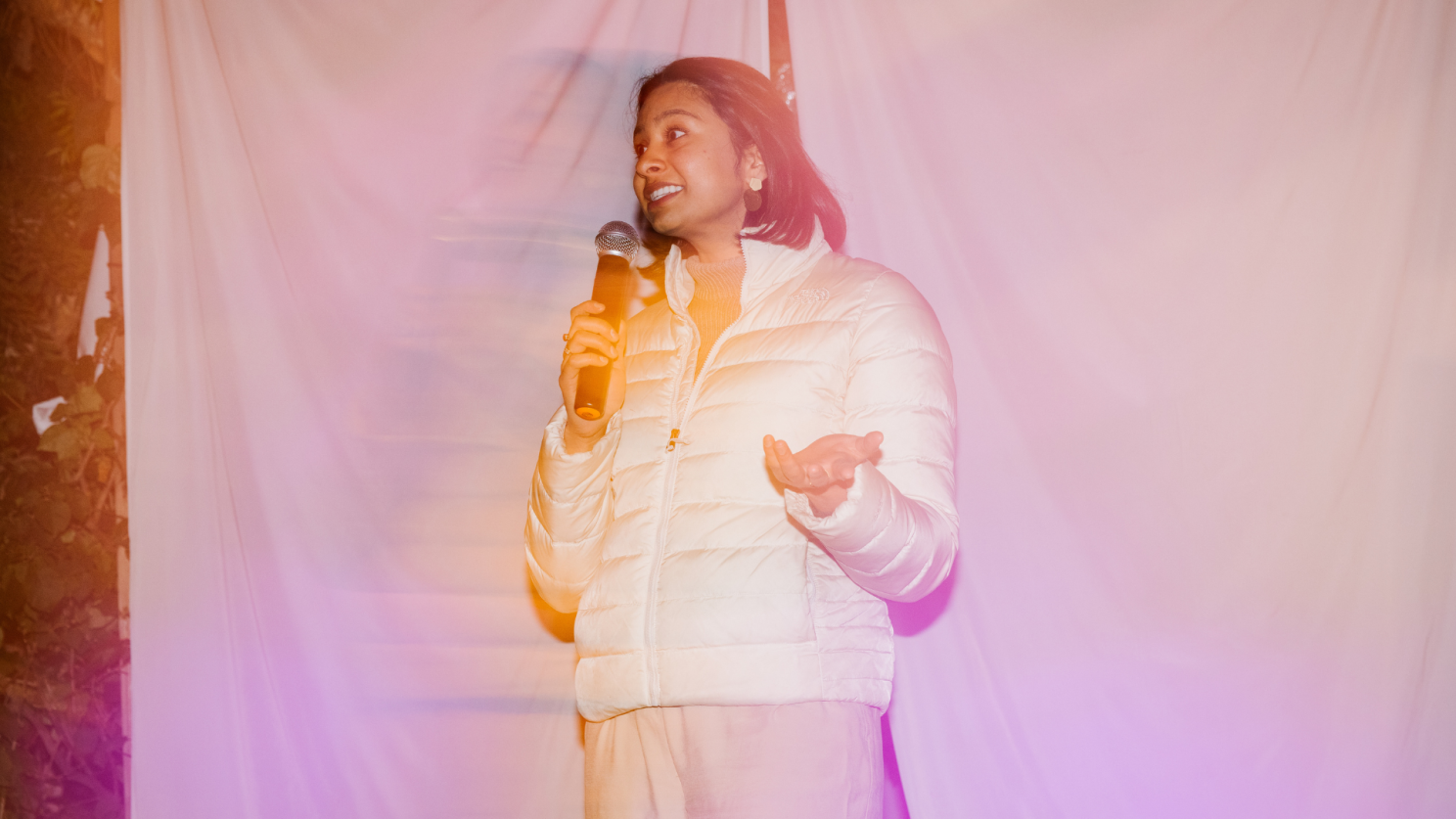
Personal Statements night was so meaningful for me. My family and best friends came from Los Angeles and the East Bay to see my work. It’s such an intense two-week sprint, and I was so exhausted when the event came around, but the best feeling was seeing my parents and sister in the courtyard. I cried many happy tears.
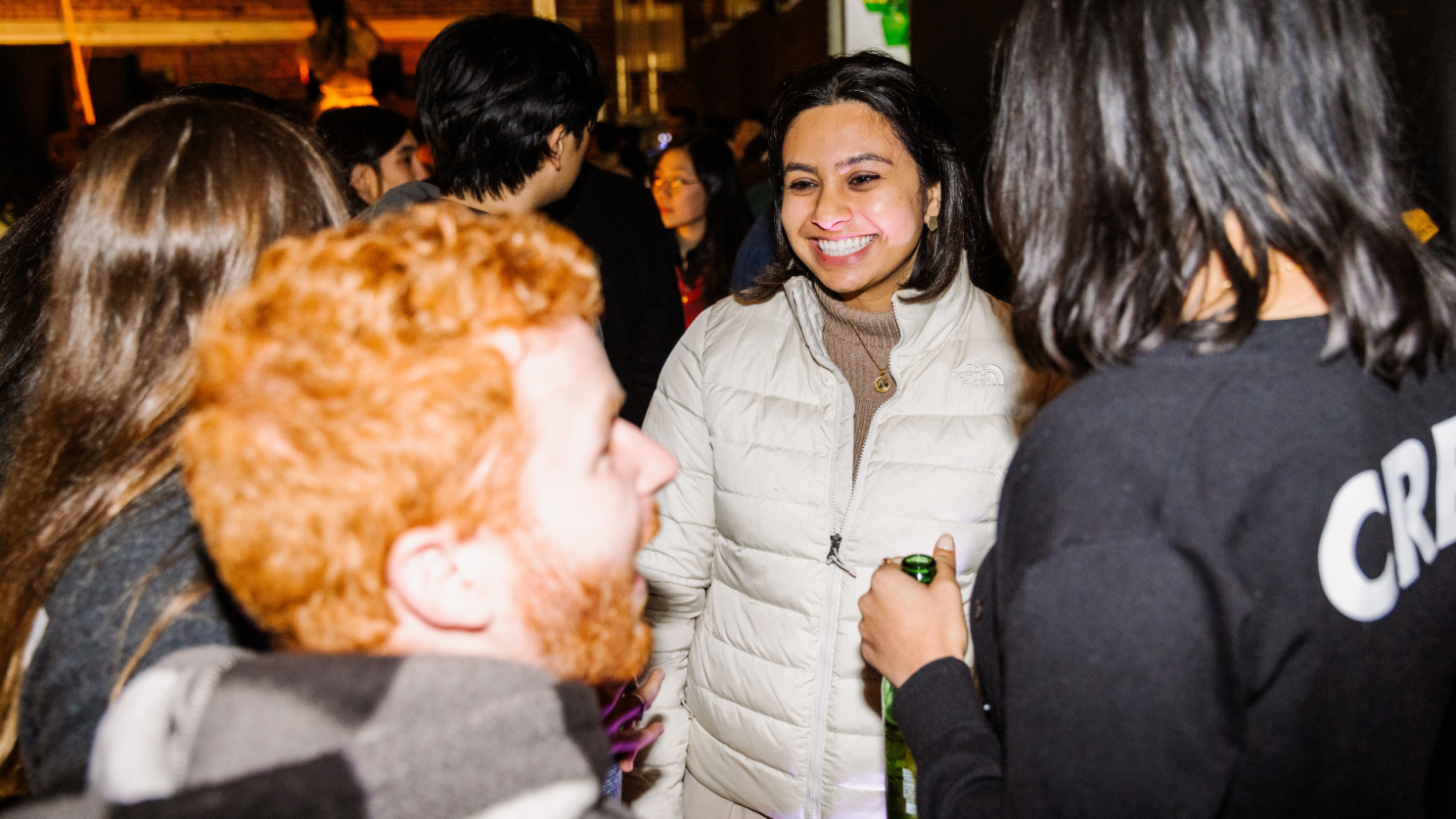
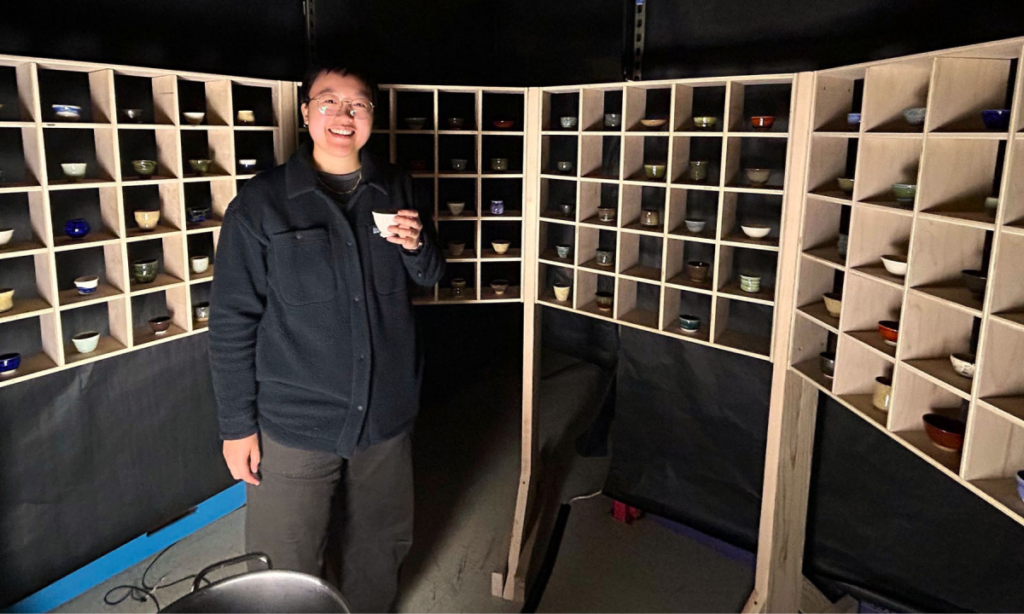
I was really surprised by how guests interacted with the corner. I had imagined one person entering at a time, or maybe the corner of the loft would offer a more calm portion of the evening. To my surprise, it was bustling the entire evening. I had set up the corner with only two pens, which at the time felt like one too many, but as the night progressed, I needed to add many more pens because there were so many people inside. I didn’t even get a chance to enter until the event was done. The experience was a testament to the importance of authentically building something that is meaningful to you for no other reason than that. The rest will follow.
The Personal Statements event was a really intense way to start the quarter, but also very meaningful. I’m someone who values the opinions of my close friends and family a lot, but it was special to have kept the project somewhat of a secret from my close friends and family. It helped me build more confidence in my ideas and gave me some freedom to just go for it.