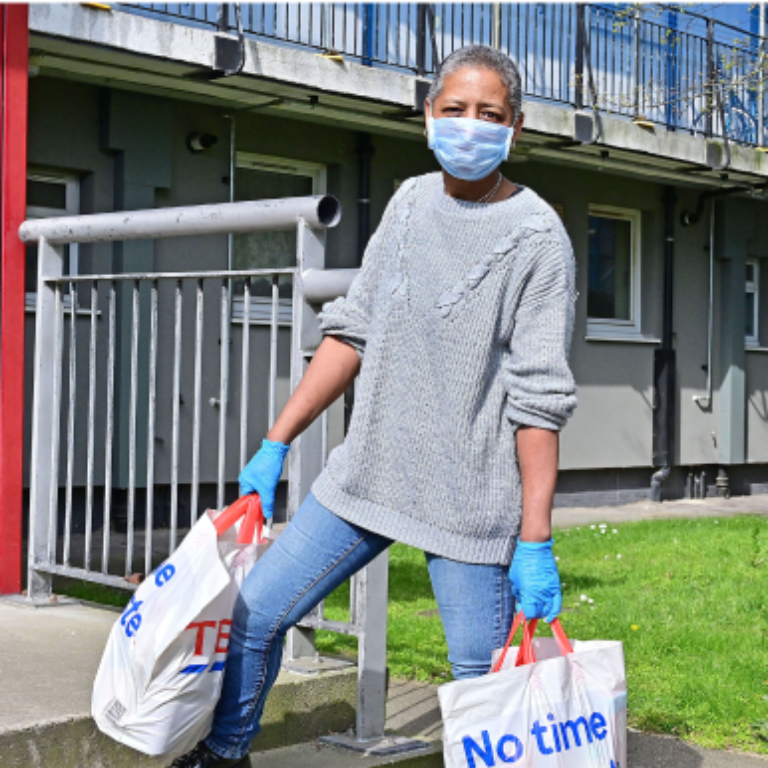
The Designing for Social Systems program develops and teaches design practices that integrate methods from human-centered design, systems thinking, and strategic planning—all grounded in a commitment to equity and anti-racism. Led by Thomas Both and Nadia Roumani, DSS’s mission is to support leaders and their organizations to bring about positive change in the world. They have seen how adopting design practices can help create that change. This case study highlights meaningful work and hard-fought impact by some of the program participants, and how design played a role.
THE CRISIS
When the British government announced an indefinite COVID-19 lockdown in March 2020, Peabody staff quickly realized they would need to develop a new means of support that would be possible under the new restrictions.
Peabody, one of the oldest and largest housing associations in the UK, provides housing and support across London and the South-East of England to over 133,000 residents, including 7,000 over the age of 70. When the health risks and lockdowns due to COVID-19 came in March 2020, it was essential for them to respond with resourcefulness and agility to successfully carry out their long-standing social mission: to make people’s lives better.
Finding a Way Through Uncertainty
In the early days of the pandemic, the Peabody Resident Services team (RS) and Tenant, Family and Support team (TFS) had already begun making check-in calls to 3,000 vulnerable residents and 6,600 elderly residents. Many residents, like 80-year-old Jane, couldn’t leave the house to pick up medication; others, like Oliver, lost jobs and needed a week’s worth of food to get back on their feet. One woman named Charlotte was struck by extreme financial hardship, as well as severe flooding in her flat. These devastating events took such a toll on Charlotte’s mental health that she attempted suicide. (Names have been changed for anonymity.)
Hearing the struggles of Jane, Oliver, Charlotte, and so many others revealed that there was an entire community of low-income, elderly, immunocompromised, and solo-inhabitant residents who were at a point of crisis and in desperate need of help.
Performing these early check-ins allowed them to see the effects of this global health crisis at a human level, and understand the needs that arose because of it. Staff reported that as a result, they felt more connected to a purpose: to ensure all residents felt as secure as possible during this period of uncertainty and upheaval.
But the scale of need was suddenly much greater than the RS and TFS teams had ever seen. With this shared commitment of keeping resident well-being as their north star, Peabody staff understood the need to employ new ways of offering support during a time of critical demand. In the last week at the office, before the complete shelter-in-place shutdown, a group of staff within the Care and Communities department gathered RS and TFS staff in front of whiteboards to begin shaping a more organized and effective COVID-19 response plan.
THE RESPONSE. The moment everything clicked
In this meeting they defined what they knew, what they didn’t know, mapped stakeholders, and drew connections. RS and TFS staff shared the feedback they were receiving from their check-in calls and interventions. This built a better understanding of the needs across client groups, and also helped the group to gain a better understanding of what each team was delivering. This level of communication between staff at the very early stage of the pandemic — shaky ground — not only provided more confidence and direction, but also built buy-in for a collective approach. Lajaune Lincoln, Head of Young People and Community Services at Peabody Community Foundation, describes this planning meeting as “the moment everything clicked.” It was a turning point for many Peabody staff members to understand how a design mindset promoted cross-departmental collaboration, innovation, and quick action.
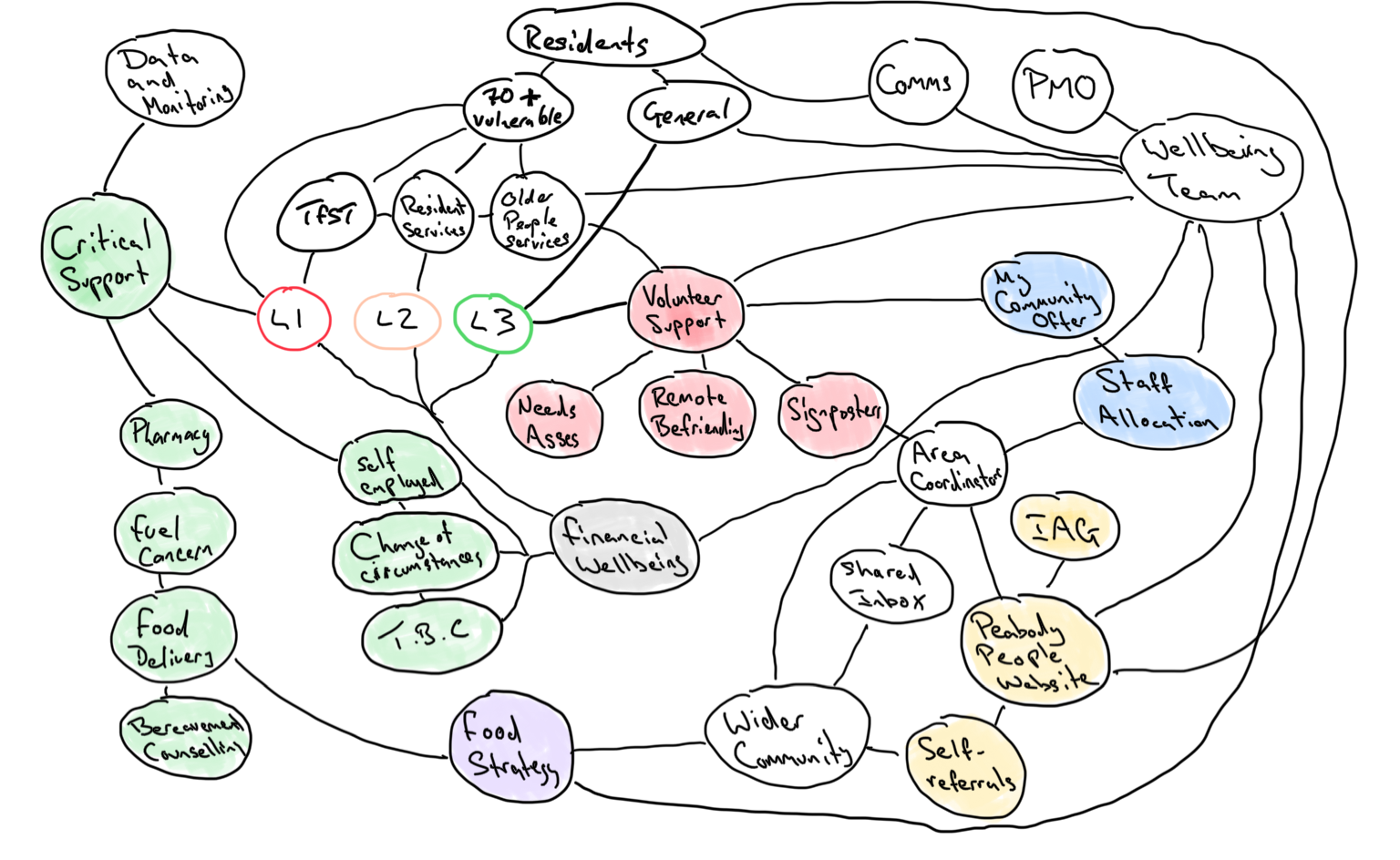
Just a couple days after this meeting, all Peabody staff were forced to leave the office indefinitely due to shelter-in-place orders. However, they had already come up with the foundation for their COVID-19 response. They named it the Resident Wellbeing Plan.
Launching the Peabody Resident Wellbeing Plan
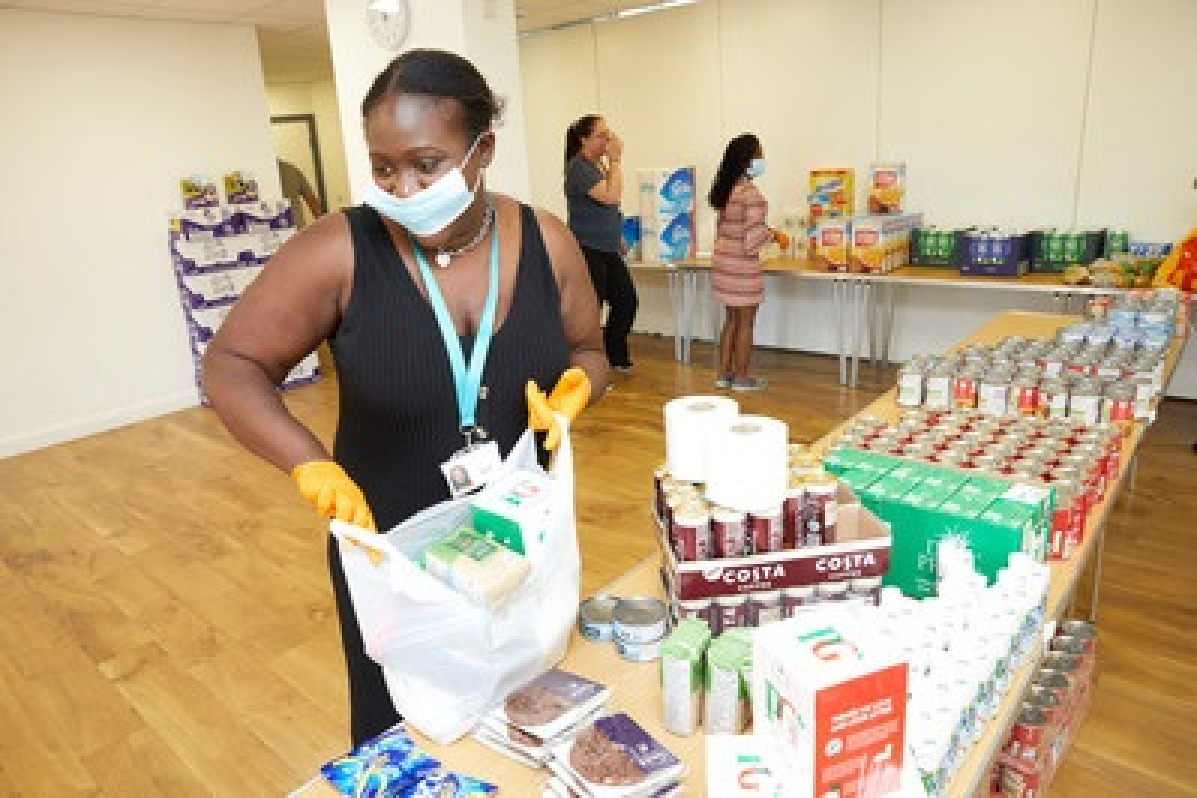
During the first week of lockdown in the UK, the Peabody Resident Wellbeing Plan officially launched. Staff were delivering food parcels to low-income families and medication to elderly residents. They worked with The Plattery, a local community partner, to drop off home-cooked meals to residents in west/central London. They built a network of businesses to donate essential items, created informational flyers, and compiled community resources. They mobilized their volunteer network to deliver care packages and serve as a friend to lonely neighbors. Thanks to their agile approach, Peabody could promptly redeploy staff members to projects that needed additional support based on staff’s preferences and strengths. Remarkably, in the first five days of lockdown alone, Peabody provided support for 1,200 people with critical needs.
The transition to online services was another key component of the Resident Wellbeing Plan. When the pandemic hit, staff members realized they needed a new means for residents to reach out for help. They moved quickly to create a COVID-19 specific website, which they built in a single weekend and launched the next Monday. Within only 5 days of launching, the website already had over 650 users with almost 100 people referring themselves and others for urgent support. The first version was far from perfect, but the steady traffic flow indicated that the website was a desired and used resource. In the subsequent months, staff integrated the platform into the main Peabody website and continuously improved and expanded its functionality according to feedback. The team’s initial bias toward action allowed them to rapidly create a practical solution in a condensed timeline.
THE RESULTS
Peabody’s Resident Wellbeing Plan resulted in considerable impact, especially crucial during a time of such great need. In just 9 months, from April to December 2020, Peabody directly assessed the needs and offered new means of support to 21,000 people.
At a community-wide level, among those 21,000 contacted, Peabody provided financial support for 1,000 residents and wellbeing support for nearly 8,000. They delivered 790,000 Personal Protective Equipment items and 7,000 food parcels to resident homes. On top of that, Peabody’s home delivery meal partnership with The Plattery has continued with success to this day. Peabody achieved these results via new approaches to providing services that they never employed before.
A design practice supported Peabody to make a substantial responsive impact in the midst of great ambiguity and change. They were able to quickly organize and engage all hands on deck, in-person and online. With their intentional outreach, team collaboration, sense-making, and ideation, the team responded more effectively to this crisis. This experience also strengthened the organizational culture, building stronger relationships, trust and practices.
3 Months After Implementation
- 7,000 FOOD PARCELS DELIVERED
- 790,000 PROTECTIVE EQUIPMENT KITS DELIVERED
- 21,000 RESIDENTS CONTACTED
- 1,000 RECEIVED FINANCIAL SUPPORT
8,000 RECEIVED WELLBEING SUPPORT
With the help of design, Peabody developed the collaboration and operational system necessary to continue providing sustained support until the end of the global pandemic. They will continue to listen to feedback and alter services in a way that makes their residents feel as secure as possible. Peabody will also continue improving its internal practices, allowing new, innovative processes to be embedded into the fabric of the long-standing organization. Lajaune and his colleagues tell us that there’s still plenty of work to be done. Fortunately, the success of their COVID-19 response acts as a catalyst for more organization-wide design practices.
Read the full case study here.
Credits
Written by Thomas Both and Olivia Sun, in collaboration with Lajaune Lincoln. Download a PDF of this case here.
Designing for Social Systems (DSS) is a program of the Stanford d.school. The purpose of DSS is to empower leaders and practitioners in the nonprofit, philanthropy, government, and social impact fields to work in more effective, human, equitable, and strategic ways. In collaboration with these practitioners, we aim to redesign how this work is done, develop more effective interventions, and advance the sector as a whole. See more at dss.stanford.edu
The Peabody Group is a housing provider, and also delivers an extensive range of community programs. The organization is responsible for over 67,000 homes in London and the South East and 155,000 residents.
Lajaune, with over 30 years of work experience in the public sector, is Head of Young People and Community Services at Peabody, with responsibility for the strategic and operational direction of community development and support services.
Lajaune attended the DSS workshop in December 2018. And has returned as a coach and instructor in workshops and webinars since then.