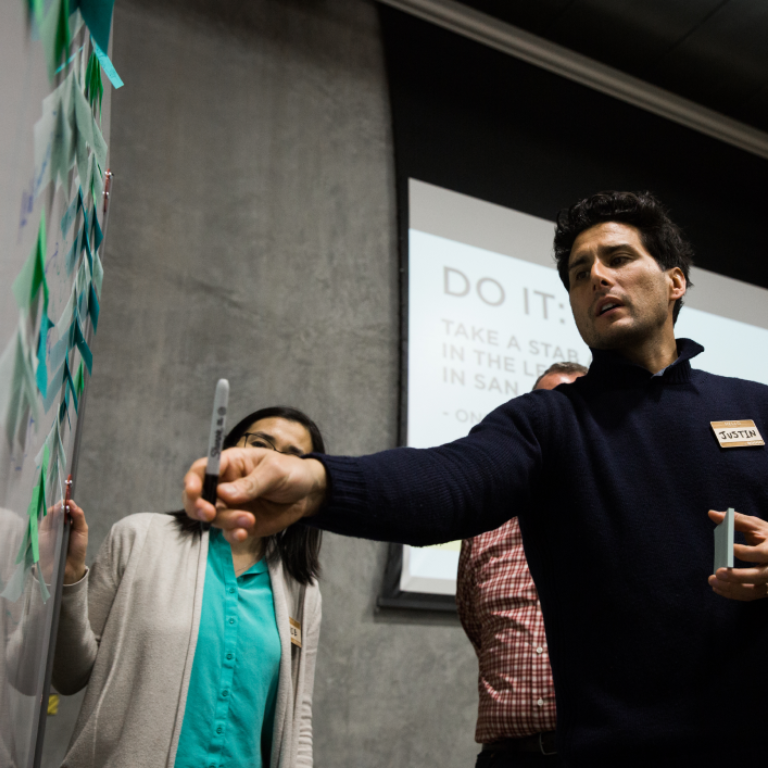
The Designing for Social Systems program develops and teaches design practices that integrate methods from human-centered design, systems thinking, and strategic planning—all grounded in a commitment to equity and anti-racism. Led by Thomas Both and Nadia Roumani, DSS’s mission is to support leaders and their organizations to bring about positive change in the world. They have seen how adopting design practices can help create that change. This case study highlights meaningful work and hard-fought impact by some of the program participants, and how design played a role.
When the challenge is so expansive, where do you start?
On Washington State’s northernmost coast resides the Lummi People, a sovereign indigenous nation of approximately 6,600 people. For the past several years, the health of the Pacific Northwest fishing community has been threatened by opioid addiction. The age-adjusted mortality rate from opioid overdoses is more than 3.5 times higher among the Lummi People than in Washington State as a whole.
Dr. Justin Iwasaki, former Executive Medical Director at the Lummi Tribal Health Center, was seeing the opioid crisis unfold everyday before his eyes. It was the nation’s most pressing health crisis before the COVID-19 pandemic, and it was further heightened within Lummi Nation. Yet his day-to-day role in primary care only provided one view of the opioid problem. As someone who had previously redesigned public health systems, Justin knew the importance of trying to understand the root causes of this systemic problem.
The opportunity to focus on this health problem arose in 2018, when Justin received a grant from the Center for Disease Control and Prevention (CDC) to develop opioid overdose prevention strategies for the Lummi Nation. Justin pulled together a four-person team from the Lummi Health System to attend the Stanford d.school’s Fall Designing for Social Systems (DSS) workshop—a team that would ultimately stay together for the duration of their opioid response program. The team included tribal member and current Executive Medical Director Dr. Dakotah Lane, Public Health Director Dr. Cristina Toledo-Cornell, and tribal member and Healthcare Administrator Tara Olsen. By the end of the Stanford workshop, they acquired critical design and systems thinking inspiration, tools, and mindsets that would support their journey ahead.
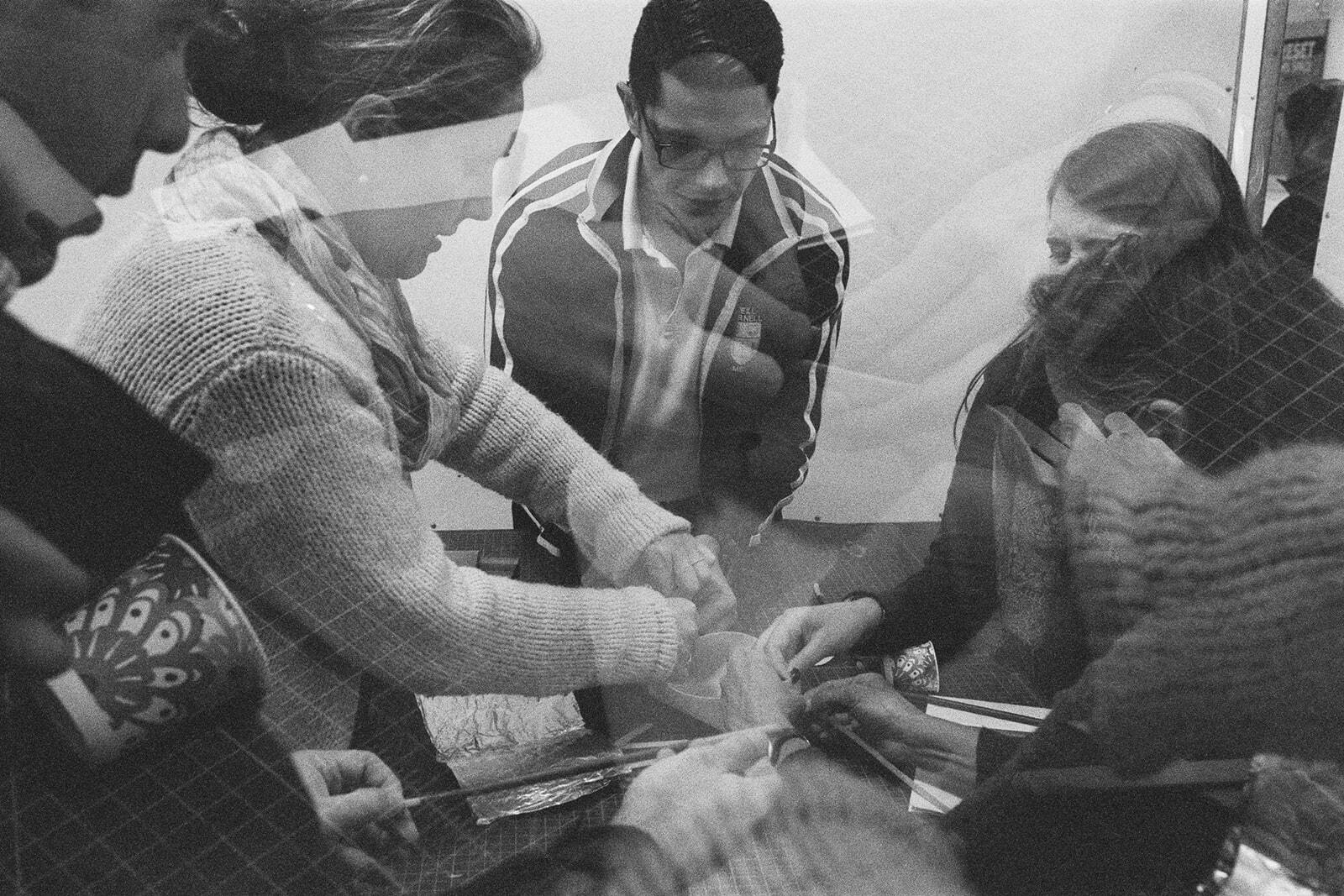
Let the people you serve guide the design
When they walked out of the d.school, one principle in particular resonated: Let the people you serve guide the design. The Lummi team realized that people experiencing opioid use disorder had to be included in the conversation about how to best design a response addressing their own problem.
With this new conviction, the team began their immersion and ethnography work. Over a couple months, they visited inpatient and outpatient rehabilitation centers in the United States as well as 18 supervised injection sites throughout Canada. Following the site visits, the team sought to better understand the individual stories of tribal members who had lived experience with drug addiction. In February 2019, the Lummi Clinic team set up a two-hour journey mapping and interview session with 35 members of a Lummi Sober Living Community, a community of tribal members who formerly faced opioid use disorder. Journey mapping, a tool which they learned from the Stanford DSS workshop, invited each person to draw out their “Journey to Recovery and Wellness Map” – a visual representation of people’s experience with opioid use. Although the Lummi team was initially uncertain of how the exercise would unfold, Justin shared: “I was shocked at how open people were with their struggle.”
Each journey map and subsequent 1-on-1 interview helped attach a real, personal story to this massive crisis. The process helped the team see former opioid users at a human level, not just as victims or medical patients. Justin, who would become Director of the Opioid Overdose Prevention Program for Lummi Nation, would later lean heavily on these journey maps to bring other stakeholders along the learning journey. The more they listened to the people being served, the better they understood them as people who had to put their hopes, dreams, and talents on hold to deal with a disorder.

Services Redesign: Opioid treatment & harm reduction services
From the deep study and engagement with those who had dealt with addiction, the team developed a three-pronged approach that transformed into the Lummi Clinic’s new opioid use disorder treatment offerings. The goal was to make the services more human-centered and accessible. The new approaches included: a low barrier Medication Assisted Treatment Program; community-based harm reduction program; and peer counselor outreach service.
The clinic staff credits Justin as “the brainchild behind the opioid response,” yet it wouldn’t have been possible without the creative problem solving and hard work from the whole team. These solutions were created with the understanding that healthcare isn’t simply about the medications, but the methods in which care is delivered to people.
Systems Redesign: Causes of the opioid crisis
The team also integrated a systems approach to better understand the systemic causes leading to high opioid use disorder and overdose rates. It was clear that treating opioid addiction as an isolated medical problem would be ineffective. The challenge was a community problem. Based on data and the lived experiences of opioid use disorder survivors, the Lummi team created a visual framework to explain the root causes and cyclical forces that lead to substance use.
Based on this understanding of the key levers in the system, the medical team began focusing their attention on two root causes: reducing drug-related crimes and addressing adverse childhood experiences.
An ongoing commitment to tackle this challenge
Justin, Dakotah, Cristina and Tara’s work to combat the opioid crisis is far from over. They credit the Designing for Social Systems program with giving them some of the tools that helped them understand a complicated community problem and find ways to address it. The team was able to move between zooming in to individual people’s stories and zooming out to visualize the larger ecosystem at play—a subtle balance that is necessary to address complex, systems-level challenges.
By applying design thinking and a systems analysis, the healthcare team maintained a human-centered approach while also acknowledging and addressing deep-seated root causes that have perpetuated an overwhelming opioid crisis. The road to solving this challenge is long, but by actively addressing this challenge on many levels, they are increasing the possibilities of long-lasting, systemic change.
Read the full case study here.
Credits
Written by Nadia Roumani and Olivia Sun, in collaboration with Justin Iwasaki and Dakotah Lane. Download a PDF of this case here.
Designing for Social Systems (DSS) is a program of the Stanford d.school. The purpose of DSS is to empower leaders and practitioners in the nonprofit, philanthropy, government, and social impact fields to work in more effective, human, equitable, and strategic ways. In collaboration with these practitioners, we aim to redesign how this work is done, develop more effective interventions, and advance the sector as a whole. See more at dss.stanford.edu
The Lummi Tribal Clinic works to raise the health status of the Lummi people, other American Indian, and Alaska Natives to the highest possible level. The clinic provides comprehensive health care including hospital, outpatient, medical, dental, mental health, preventive healthcare and public health services. Executive Medical Director Dr. Dakotah Lane, Former Executive Medical Director Dr. Justin Iwasaki, Public Health Director Dr. Cristina Toledo-Cornell, and Healthcare Administrator Tara Olsen attended the Designing for Social System workshop in December 2018.