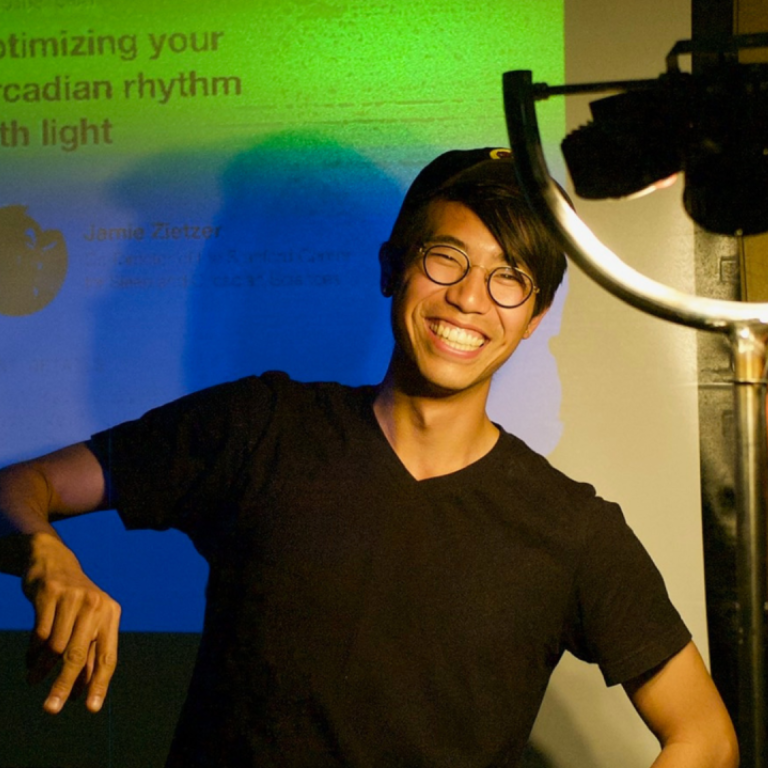
Learning and experiencing design can come in many flavors, and this series aims to give the design community a glimpse into what our grad students experience during their time at the d.school and then beyond. We'll showcase some of their coursework and projects like the Design Master’s Capstone, which is the culmination of all the work they've done as a grad student. We'll also offer the chance to view student portfolios, connect with the students professionally via LinkedIn, and share any student-launched product, service, or business web pages.
What brought you to the d.school?
I have always had a fascination with how our built environment and designed products shape how we live, think, and feel. In high school, I was enamored by the idea of human-centered design—the thought that we can harness empathy with creation to improve people’s lives. The act of creation for others felt like an expression of care, something that resonated deeply with my identity.
In fact, back in high school, I was so driven by this curiosity that I reached out to David Kelley directly. I sent him a cold email asking for advice on how to merge creativity and technicality in my future career, as I felt torn between pursuing art or science. I didn’t expect a response, but I was eager for any perspective he could offer. Here’s a bit from the email I sent him:
“I'm sending you this email because, after reading your bio, I thought that you might be able to provide some useful perspective. My biggest fear is unwittingly becoming the unhappy engineer climbing the corporate ladder... scrolling through the list of majors my college counselor gave me, it really pained me to see that I had to make a choice; a choice between creativity and technicality, between art and science, between words and numbers, between people and machines. ...I want to study Mechanical Engineering when I go to college... but more importantly, I want to gain the skills necessary to thoughtfully and empathetically design products that improve people's lives. I want my work to be meaningful.”
Fast forward to today, and I found my way to the d.school—sitting on David Kelley’s couch, listening to his critique of our design work. That moment felt like a full circle, from that email to being immersed in the very program I had once dreamed of. It was the chance to finally explore and express those early ambitions, to blend empathy with creativity and technology, and to shape products that could make a positive difference.
How would you describe your experience in the d.school’s Master’s in Design degree program?
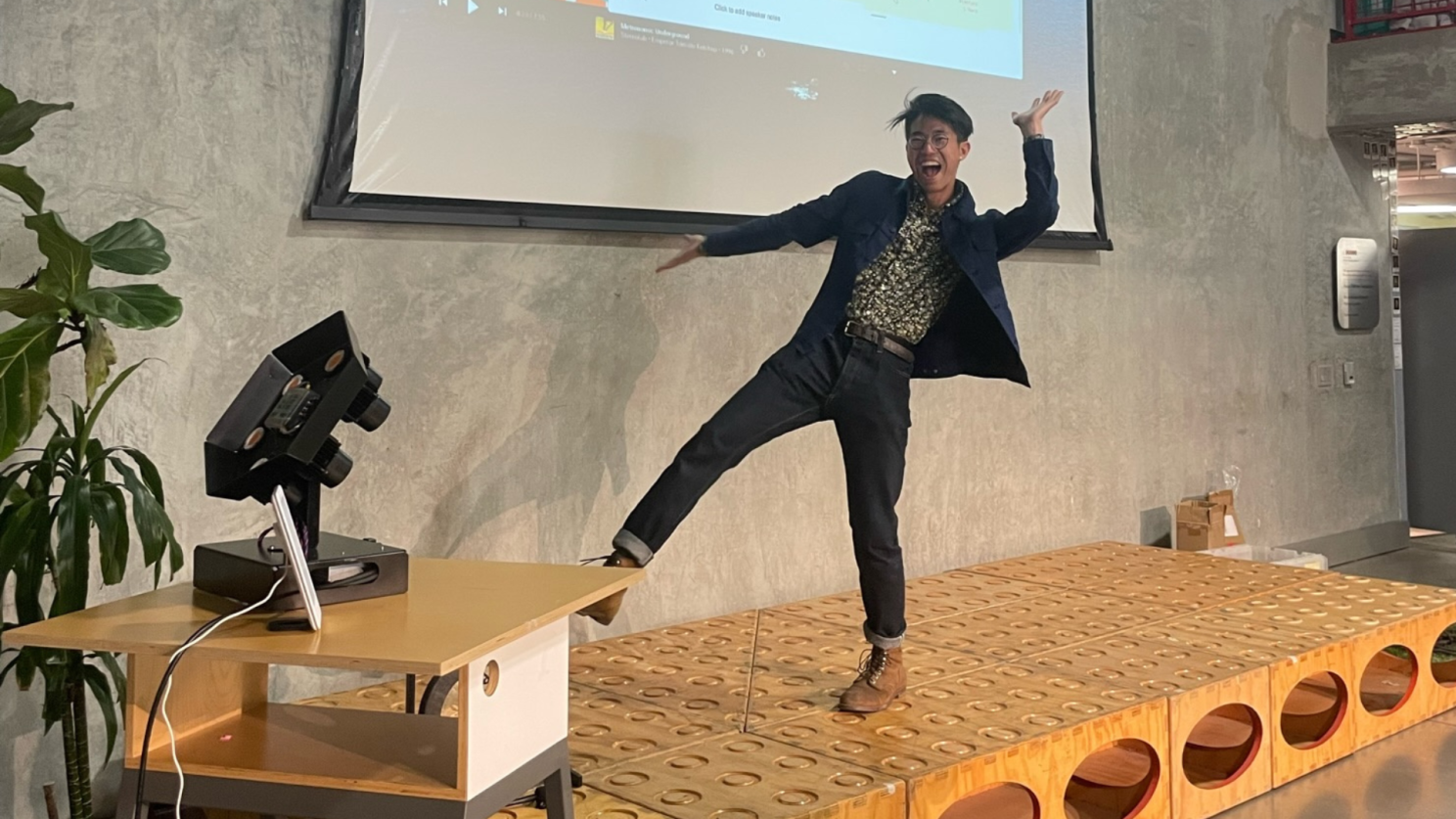
The d.school’s Master’s in Design program felt like being a free-range chicken—wandering through an expansive, open field of possibilities, pecking at ideas, sometimes soaring, sometimes stumbling. The abundance of time, space, and resources provided the freedom to chase wild ideas and unexpected inspirations, but that same freedom could feel overwhelming, like a being lost in a labyrinth of your own potential.
Access to professors’ feedback and time was like having wise guides stationed along the way, offering just enough direction to spark new insights without taking away the thrill of discovery. Meanwhile, the love between Loftees (the term we use to refer to current grad students) created a safety net—a reminder that even when you felt untethered, you were never truly alone.
At times, the sheer number of paths ahead made it easy to feel paralyzed, standing in a vast landscape of what-ifs and unrealized ideas. But maybe that was the point: to get lost, to embrace the uncertainty, and to learn that the journey itself was the design.
What was your favorite course during your time at Stanford?
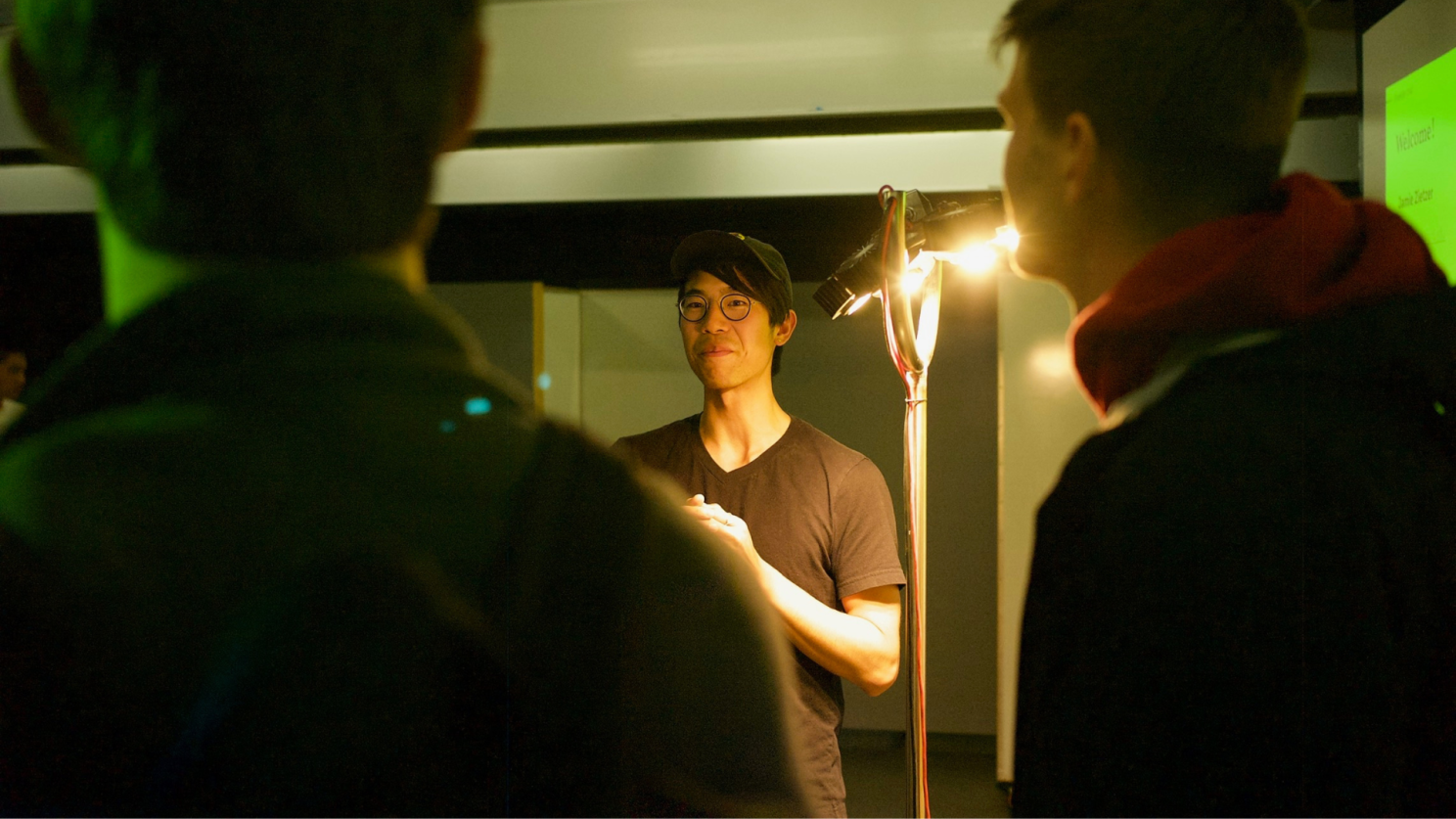
My favorite course at Stanford was David Kelley and Scott Doorley's DESIGN 365. What made it special wasn’t just the content—it was the experience of being welcomed into David’s home, a space filled with beautiful design objects, each carrying its own story.
Every week, we gathered there for critique, but it never felt like just a class. David hosted us with such warmth and care, creating an environment where conversation, reflection, and learning felt deeply personal. It was more than just feedback on our work; it was a ritual, a shared moment of appreciation for design, storytelling, and each other. I felt an immense gratitude to be part of that experience—one where design wasn’t just studied, but truly lived.
More than anything, DESIGN 365 reignited a childlike joy in creating—creating for the sake of curiosity, for the love of making things for others, for the thrill of exploring materials and understanding how things come into being. It reminded me that design isn’t just about solving problems or achieving perfection; it’s about play, about wonder, about the simple delight of shaping something with your own hands and seeing it take form. In that space, surrounded by stories, objects, and people who cared deeply, I rediscovered the magic of making—not for a grade, not for a market, but just for the sheer joy of it.

What did you work on or explore for your Master’s Capstone?
For my Master’s Capstone, I founded Rhythm Technologies, a circadian wellness company focused on harnessing light to improve well-being. As a visual artist, I’ve always been fascinated by light—not just as an aesthetic element, but as a medium and a collaborator. My work explored both the artistic and scientific dimensions of light: how it shapes our spaces, our emotions, and even our physiology.
Pia Bocanegra joined my team as a collaborator for our Master's Thesis, contributing her expertise in business development, branding, product, and website design. Together, we developed light-administering hardware and light-tracking software to help people suffering from light-related mood disorders receive the light they need to feel happy, healthy, and well.
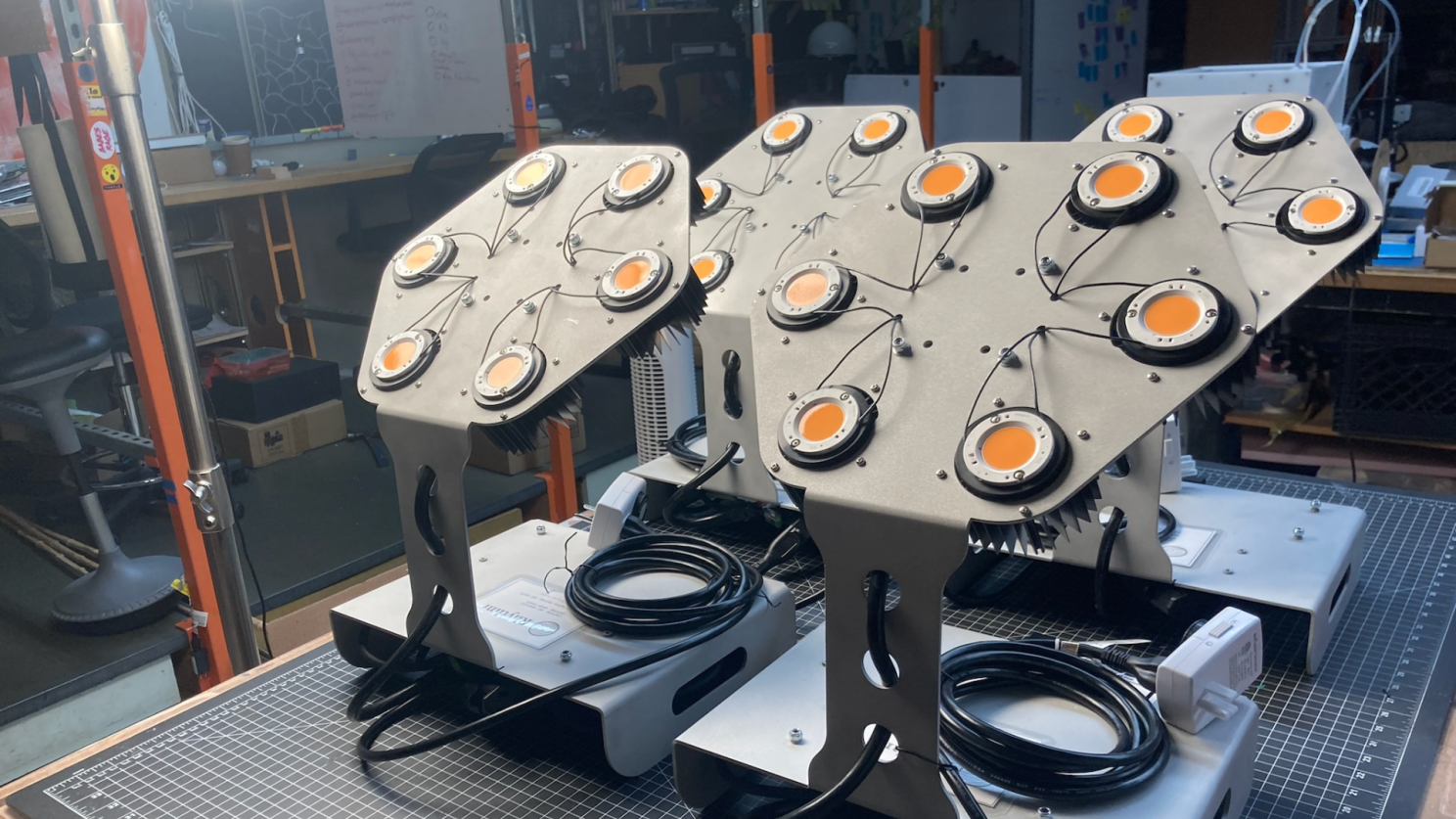
I led the hardware development, prototyping, testing, and fabrication, working to bring our vision to life. Our first product is a sunlight generator, designed to transform the feeling of indoor spaces by mimicking the dynamic qualities of natural light. Currently, I’m building and testing a works-like prototype, and we are actively seeking feedback and collaboration from experts in lighting, wellness, and design. This capstone wasn’t just an academic project—it was the beginning of something that could truly improve people’s lives through the power of light.

What’s next for you?
I'm still deeply involved in Rhythm Technologies, where we've started selling prototype units of our Rhythm lights to early adopters. We have units in San Francisco, New York City, and even Switzerland. Alongside that, I'm working at the hardware startup GaeaStar, where I'm gaining valuable experience in the intersection of hardware and innovation. Additionally, I'm in the process of building my own creative studio space to have a dedicated environment for personal and professional projects—where I can continue to explore, create, and collaborate.
Final Thoughts
I’d like to take a moment to express my gratitude for the Stanford program—for the opportunities, the inspiring people, and the space to explore my passions. The journey has been incredibly formative, and I’m thankful for all the knowledge, connections, and experiences that have helped shape my path. A special thanks goes to my fellow Loftees—the sense of community and collaboration we shared made the experience truly special. Their support, creativity, and shared passion made a profound impact on my journey. I also owe a thank you to the mentors, collaborators, and friends who have offered guidance, encouragement, and wisdom along the way.
As I look toward the future, I’m excited for what lies ahead—the new challenges, opportunities, and relationships that will continue to shape my journey. I’m eager to keep pushing the boundaries of what’s possible.
